


 >


Why Does Wire EDM Develop Carbonized Wire Marking?
By hqt
Oct 15, 2026
Related Posts

Stainless Steel Precision Parts: A Complete Guide to Stainless Steel Machining
2026-11-02<

What to Pay Attention to When Machining Tungsten Carbide
2026-10-30<

Stainless Steel Precision Parts: A Complete Guide for Modern Manufacturing
2026-10-27<

When Is a Hot Runner System Essential for Plastic Mold Manufacturing?
2026-10-22<
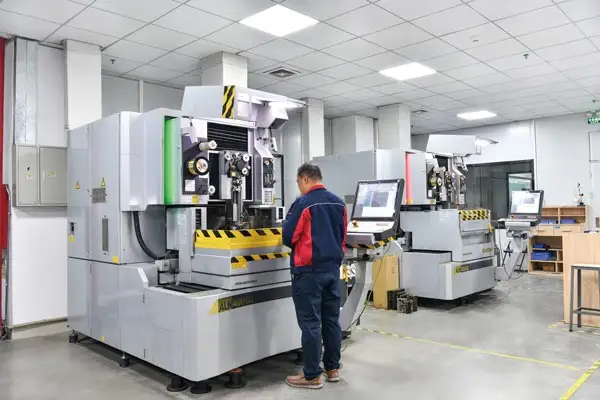
Carbonized wire marking is a common fault in wire EDM. It refers to periodic dark spots and carbonized patterns on the electrode wire. Once this defect occurs, the electrode wire becomes thinner and brittle, which easily causes wire breakage, compromises machining stability and workpiece surface quality. It is a frequent process issue for both high-speed and medium-speed wire EDM operations in mold and precision component manufacturing. This article explains the mechanism, root causes and prevention strategies of carbonized wire marking, providing troubleshooting guidance for mold and precision part machining.
1. Underlying Mechanism of Carbonized Wire Marking
Normal wire EDM removes metal through pulsed spark discharge. During the pulse interval, dielectric fluid achieves deionization to cut off the discharge channel. When deionization fails, spark discharge transitions into continuous arcing. High temperature from electric arcs decomposes the dielectric fluid and generates carbides. Carbon particles adhere to the electrode wire surface and cause localized carbonization and burn marks, forming segmented dark patterns known as carbonized wire marking. Sustained arcing continuously erodes the electrode wire substrate and acts as a precursor to wire breakage.
2. Primary Causes of Carbonized Wire Marking
2.1 Abnormal Dielectric Fluid and Medium Conditions
Dielectric fluid performs cooling, chip removal and deionization functions. After prolonged use, the fluid accumulates excessive contaminants and loses dielectric strength. It cannot restore insulation rapidly during pulse intervals, making continuous arcing easier to sustain. For thick workpieces, longer discharge gaps hinder the removal of eroded debris, resulting in accumulated contaminants and higher risks of arcing. Improper dielectric selection, unbalanced concentration and high salinity in water degrade deionization performance and increase the likelihood of carbonized wire marking.
2.2 Improper Pulse Power Supply Parameters
If the pulse power supply carries DC components that delay arc extinction, the electric arc cannot terminate within the pulse interval and continuously burns the electrode wire. Mismatched machining parameters such as too short pulse interval and excessive peak current generate high discharge energy per unit time. Chip removal cannot keep up with material erosion speed, carbon slag accumulates inside the discharge gap, stable spark discharge collapses, and carbonized wire marking emerges.
2.3 Worn Machine Consumables and Wire Transport System Malfunctions
Worn, grooved or poorly contacting power feed blocks lead to unstable current transmission and localized current concentration, triggering abnormal discharge. Worn guide wheels and bearings cause electrode wire vibration and constant fluctuation of discharge gaps. Electrode wire with material defects, surface coating peeling or insufficient tensile strength is more prone to carbonization under thermal cycling and arc impact. Contaminated or leaking machine insulation components also destabilize the pulse circuit and induce carbonized wire marking.
2.4 Workpiece Material Factors
Oxide scale, quenching layers and internal impurities on the workpiece surface enter the discharge gap and act as conductive particles, disrupting discharge stability. During thick stock machining, residual carbon slag inside the original kerf may reinitiate arcing and carbonized wire marking in secondary cutting operations.
3. General Prevention Strategy for Carbonized Wire Marking
Troubleshooting carbonized wire marking follows the sequence: dielectric medium, power supply, consumables and workpiece. First inspect the condition of dielectric fluid; replace the fluid and clean the water tank if necessary. Check power feed blocks and guide wheel assemblies, and replace worn parts promptly. Re-optimize pulse parameters by extending pulse interval moderately and lowering peak current. Remove oxide layers on the workpiece surface before machining, and enhance flushing and chip removal for thick workpiece cutting. Once carbonized wire marking appears, replace the electrode wire and clean the machine table and insulation components to eliminate recurring faults caused by residual contaminants.
FAQ
Q1: Can machining continue after carbonized wire marking appears? A: Continued machining is not recommended. Carbonized wire marking means the electrode wire has become carbonized and brittle. Further processing will most likely cause wire breakage and scratch the workpiece. Stop the machine for troubleshooting, replace the electrode wire and clear contaminants inside the discharge gap.
Q2: Is carbonized wire marking impossible for thin material cutting? A: Thin materials feature better chip removal and lower risk of carbonized wire marking. However, contaminated dielectric fluid, damaged power feed blocks and incorrect parameters can still trigger this issue, so it cannot be completely ignored.
Q3: How to distinguish carbonized wire marking from ordinary wire burning? A: Carbonized wire marking shows periodic segmented dark spots on the electrode wire. Ordinary wire burning is mostly localized single-point erosion without regular patterns. Both problems originate from abnormal arc discharge.
Q4: Carbonized wire marking reoccurs after installing new molybdenum wire. What is the cause? A: The root cause is not the electrode wire itself. It is likely related to dielectric fluid, power feed blocks, machine insulation or workpiece material. Thoroughly clean the machine and test the pulse circuit.


Request A Quote
We offer one-stop consulting services from design to mass production, ready to answer your questions anytime!


In This Article
Related Posts
Stainless Steel Precision Parts: A Complete Guide to Stainless Steel Machining
2026-11-02
What to Pay Attention to When Machining Tungsten Carbide
2026-10-30
Stainless Steel Precision Parts: A Complete Guide for Modern Manufacturing
2026-10-27
When Is a Hot Runner System Essential for Plastic Mold Manufacturing?
2026-10-22


