


 >


Medical CNC Machining Requirements: A Complete Guide for Precision Manufacturers
By hqt
Oct 13, 2026
Related Posts

Stainless Steel Precision Parts: A Complete Guide to Stainless Steel Machining
2026-11-02<

What to Pay Attention to When Machining Tungsten Carbide
2026-10-30<

Stainless Steel Precision Parts: A Complete Guide for Modern Manufacturing
2026-10-27<

When Is a Hot Runner System Essential for Plastic Mold Manufacturing?
2026-10-22<
Introduction
In the highly regulated medical device industry, medical CNC machining serves as a critical manufacturing process that produces components used in surgical instruments, implantable devices, diagnostic equipment, and prosthetics. Unlike general-purpose machining, medical CNC machining demands an exceptional combination of dimensional accuracy, material certification, regulatory compliance, and contamination control. Every part produced must meet stringent industry standards because even the smallest deviation can directly impact patient safety and clinical outcomes.
This guide outlines the essential requirements that govern medical CNC machining, covering regulatory frameworks, material selection, precision benchmarks, environmental controls, and documentation practices that every qualified manufacturer must address.
Regulatory Compliance and Quality System Standards
The foundation of medical CNC machining rests on adherence to recognized global regulatory frameworks. Manufacturers operating in this space must maintain certified quality management systems that align with the specific demands of healthcare production.
The primary standard governing medical device manufacturing is ISO 13485, which establishes requirements for a comprehensive quality management system. This certification is not optional—it is a prerequisite for supplying components to most original equipment manufacturers in the medical sector. Under ISO 13485, every stage of the machining process, from incoming material inspection to final part release, must be documented and traceable.
In addition to ISO 13485, medical CNC machining operations often must comply with FDA 21 CFR Part 820 for companies serving the United States market. This regulation covers design controls, purchasing controls, production and process controls, and record retention. For manufacturers exporting to Europe, compliance with the Medical Device Regulation (MDR 2017/745) is essential, along with CE marking procedures.
ISO 9001 remains a baseline requirement, but it is insufficient on its own for medical applications. The distinction between general machining and medical CNC machining lies in the depth of process validation, risk management documentation, and post-market surveillance obligations that medical standards impose.
Material Requirements and Certification
Material selection in medical CNC machining is governed by biocompatibility, mechanical performance, and regulatory approval—not merely cost or machinability. The materials used must be validated for their intended contact duration with the human body, whether that contact is superficial, prolonged, or permanent.
Biocompatible Metals
Titanium alloys, particularly Ti-6Al-4V (Grade 5) and Ti-6Al-4V ELI (Grade 23), are the most widely used materials in medical CNC machining for implantable components. Their high strength-to-weight ratio, corrosion resistance, and osseointegration properties make them ideal for orthopedic implants, dental fixtures, and spinal devices. ELI grades reduce interstitial impurities to enhance fracture toughness and fatigue resistance.
Stainless steel grades—including 316L, 304, and 17-4 PH—are common for surgical instruments, non-implantable device housings, and temporary implants. The "L" designation indicates low carbon content, which reduces carbide precipitation and improves corrosion resistance after welding or heat treatment.
Cobalt-chromium alloys, such as CoCrMo and CoNiCrMo, are preferred for high-wear applications including knee and hip joint components, owing to their exceptional hardness and biocompatibility.
Biocompatible Polymers
For non-metallic components, medical CNC machining frequently works with peek, Ultem (PEI), polycarbonate, nylon, and silicone. Peek is particularly valued for implantable applications because it can be sterilized repeatedly, radiographically transparent, and mechanically similar to bone. All polymer stock must carry biocompatibility certification to ISO 10993 standards.
Material Traceability
Every batch of material used in medical CNC machining must be accompanied by a mill test certificate (MTC) specifying chemical composition, mechanical properties, and heat lot numbers. This traceability chain must extend from raw material through machining, surface treatment, and final assembly, enabling complete recall capability if a quality issue emerges.
Precision, Tolerance, and Dimensional Requirements
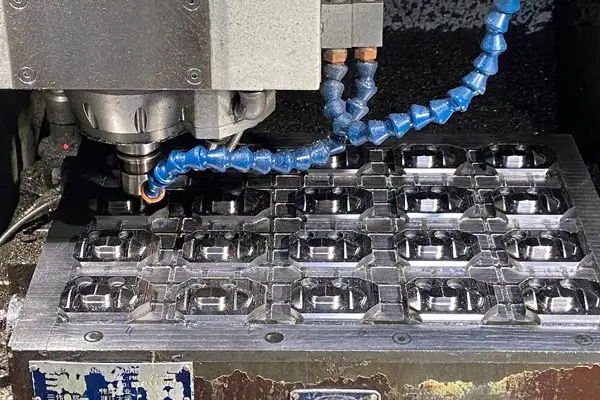
The precision demands of medical CNC machining exceed those of most industrial sectors. Depending on the application, features may require tolerances as tight as ±0.005 millimeters, and surface roughness values below Ra 0.4 micrometers.
Tolerance Classes
Orthopedic implants and surgical instruments typically require ISO 2768 medium-to-fine tolerance classes, though critical mating surfaces demand much tighter controls. Micro-device components—such as those used in neurovascular stents, catheter shafts, and minimally invasive surgery tools—often require tolerances measured in micrometers, necessitating five-axis CNC machining centers with thermal compensation and real-time probing.
Process Capability
Medical component manufacturers must demonstrate process capability indices (Cpk) of at least 1.33, and often 1.67, for critical dimensions. This statistical requirement means that the machining process must be inherently stable and centered within specification, not merely capable of occasionally producing conforming parts. Achieving these Cpk values requires controlled cutting parameters, tool wear monitoring, in-process measurement, and environmental temperature stabilization.
Validation
Process validation under IQ/OQ/PQ protocols is a mandatory aspect of medical CNC machining. Installation qualification confirms that equipment is correctly installed; operational qualification demonstrates that the machine can consistently produce parts within defined parameters; and performance qualification establishes long-term process stability through production-run data collection.
Cleanroom and Contamination Control
Contamination control distinguishes medical CNC machining from conventional precision machining. The environment in which medical components are produced directly affects their sterility readiness and biocompatibility.
Cleanroom Classification
Many implantable components are machined in ISO 14644-1 Class 7 or Class 8 cleanrooms. These controlled environments regulate airborne particulate count, temperature, humidity, and personnel movement. Class 7 environments allow no more than 352,000 particles per cubic meter at 0.5 micrometers, compared with millions in a typical industrial workshop.
For components that will be directly implanted, medical CNC machining may occur in even cleaner conditions, with dedicated machining cells, specialized lubricants, and operator gowning protocols.
Lubrication and Cutting Fluids
Conventional cutting fluids can leave residues that compromise biocompatibility. Medical-grade machining often uses minimum quantity lubrication (MQL), cryogenic cooling with liquid nitrogen, or dry machining for certain materials. Any fluid used must be documented, and subsequent cleaning processes must validate that residual levels are below acceptable thresholds.
Separation of Non-Medical and Medical Production
To prevent cross-contamination, reputable medical CNC machining facilities maintain physical separation between medical component production and general industrial work. Dedicated tools, fixtures, and cleaning stations are often assigned to medical programs, and material handling procedures prevent accidental mixing.
Surface Finish and Post-Processing Requirements
Surface finish in medical CNC machining affects not only appearance but also osseointegration, bacterial adhesion, fatigue life, and friction characteristics.
Implants require controlled surface roughness to encourage bone growth—typically Ra 1.6 to Ra 6.3 micrometers for orthopedic interfaces, achieved through bead blasting, acid etching, or anodizing. Conversely, bearing surfaces in joint replacements must be mirror-finished to minimize wear, sometimes requiring Ra values below 0.05 micrometers through precision grinding and polishing.
Surgical instruments often passivate after machining to remove free iron and enhance corrosion resistance. For stainless steel components, passivation in accordance with ASTM A963 is standard. Titanium components may undergo anodizing to create a protective oxide layer and color-coding for size identification.
All post-processing steps must be validated, and the effects of each operation on dimensional accuracy must be accounted for in the machining tolerance stack-up.
Documentation, Traceability, and Inspection
The documentation burden in medical CNC machining is substantial and integral to regulatory compliance.
Required Documentation
A typical medical component job packet includes a production route card, inspection plan, first-article inspection report, in-process measurement records, material certificates, non-conformance reports (if any), and a final certificate of conformity. For regulated components, these records must be retained for the lifetime of the device, often exceeding 15 years.
Inspection Capabilities
Inspection equipment in a medical CNC machining facility includes coordinate measuring machines (CMMs), optical comparators, vision systems, surface roughness testers, and thread gauges. Calibration of all measurement equipment must be traceable to national standards, and calibration intervals must be documented.
First-Article Inspection
Every new or revised medical component must undergo first-article inspection (FAI) against the drawing, often in accordance with AS9102 formats adapted for medical use. The FAI verifies that the complete production process—from programming through fixturing to final inspection—can produce a conforming part before full production begins.
Design for Manufacturability in Medical CNC Machining
Successful medical CNC machining outcomes depend on close collaboration between device designers and manufacturing engineers. Design for manufacturability (DFM) reviews early in the product development cycle prevent costly redesigns and ensure that components can be machined within medical-grade tolerances.
Key DFM considerations include avoiding extremely thin walls that may deflect during cutting, ensuring internal features are accessible to standard tooling, designing radii that match available end mill sizes, and specifying tolerances that are achievable without resorting to prohibitively expensive secondary operations. Designers should also consider whether a feature is necessary for function versus merely convenient on the drawing, since every additional tolerance and surface specification adds cost and inspection burden in medical CNC machining.
Choosing a Medical CNC Machining Partner
When selecting a supplier for medical CNC machining, device manufacturers should evaluate not only machining capability but also the supplier's quality certifications, cleanroom capacity, material handling procedures, documentation practices, and experience with comparable devices. Requesting references from existing medical customers, auditing the facility, and reviewing sample inspection reports are all prudent steps.
A qualified medical CNC machining partner acts as an extension of the device manufacturer's quality organization, contributing process knowledge, design feedback, and regulatory awareness throughout the product lifecycle.
Frequently Asked Questions
Q1: What certifications are required for medical CNC machining?
A1: At minimum, an ISO 13485 certification is required for any manufacturer producing components for medical devices. Additional relevant certifications include ISO 9001, compliance with FDA 21 CFR Part 820 for the US market, and conformity with EU MDR requirements for European markets. Cleanroom certification to ISO 14644 is also necessary for implantable component production.
Q2: What materials are most commonly used in medical CNC machining?
A2: The most common materials are titanium alloys (Ti-6Al-4V and ELI grade), medical-grade stainless steels (316L, 17-4 PH), cobalt-chromium alloys, and biocompatible polymers such as Peek and Ultem. Material choice depends on whether the component is implantable, how long it contacts the body, and its mechanical load requirements.
Q3: How tight are the tolerances in medical CNC machining compared to general machining?
A3: While general industrial machining may hold ±0.05 millimeters, medical components often require ±0.01 millimeters or tighter on critical features, and micro-device features can demand tolerances below ±0.005 millimeters. Medical manufacturers must also demonstrate statistical process capability (Cpk ≥ 1.33) rather than merely producing conforming parts occasionally.
Q4: Are medical components machined in cleanrooms?
A4: Yes, implantable and sterile-ready components are typically machined in ISO Class 7 or Class 8 cleanrooms with controlled temperature, humidity, and particulate levels. Non-implantable device components may be produced in standard precision environments followed by validated cleaning processes, depending on the device classification.
Q5: How is traceability maintained in medical CNC machining?
A5: Every batch of material carries mill test certificates with heat lot numbers, and these records are linked to each production job. Individual parts may be marked with laser etching or dot peen identification, and all production, inspection, and non-conformance records are retained for the device lifetime—typically 15 years or more—enabling full recall if required.
Share on Social:


Request A Quote
We offer one-stop consulting services from design to mass production, ready to answer your questions anytime!


In This Article
Related Posts
Stainless Steel Precision Parts: A Complete Guide to Stainless Steel Machining
2026-11-02
What to Pay Attention to When Machining Tungsten Carbide
2026-10-30
Stainless Steel Precision Parts: A Complete Guide for Modern Manufacturing
2026-10-27
When Is a Hot Runner System Essential for Plastic Mold Manufacturing?
2026-10-22


