


 >


Stainless Steel Precision Parts: A Complete Guide to Stainless Steel Machining
By hqt
Nov 02, 2026
Related Posts

Stainless Steel Precision Parts: A Complete Guide to Stainless Steel Machining
2026-11-02<

What to Pay Attention to When Machining Tungsten Carbide
2026-10-30<

Stainless Steel Precision Parts: A Complete Guide for Modern Manufacturing
2026-10-27<

When Is a Hot Runner System Essential for Plastic Mold Manufacturing?
2026-10-22<
Introduction
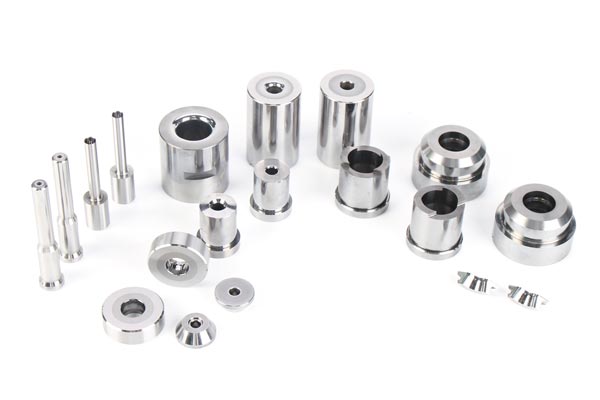
Stainless steel precision parts sit at the core of nearly every system that must perform reliably under demanding conditions — from surgical instruments and semiconductor equipment to optical communication modules, food processing lines, and chemical plants. Behind these components stands one of the most valuable manufacturing capabilities in modern industry: stainless steel machining. When executed correctly, stainless steel machining produces parts that combine corrosion resistance, mechanical strength, and the tight dimensional tolerances that mission-critical applications require. This guide explains what stainless steel machining involves, how to select the right material grade, how to overcome its well-known difficulties, and what to look for when choosing a machining partner.
What Is Stainless Steel Machining?
Stainless steel machining is the process of removing material from stainless steel workpieces — through cutting, grinding, or electrical discharge — to create components with defined dimensions, surface finish, and geometry. Typical operations include CNC milling, CNC turning, drilling, tapping, wire EDM, and precision grinding.
What sets stainless steel machining apart from machining other metals is the material itself. Stainless steel alloys contain chromium, which forms a passive oxide layer that gives the metal its corrosion resistance. That same chemistry, however, also makes the material tougher, less thermally conductive, and more prone to work hardening than carbon steel or aluminum — which means the machining process must be planned and controlled with far more care.
Why Stainless Steel Machining Matters for Precision Parts
Corrosion resistance. Machined stainless steel parts resist rust, pitting, and chemical attack, making them the default choice for medical, marine, food, and pharmaceutical environments.
Strength and durability. Stainless steel parts maintain mechanical integrity under load, pressure, vibration, and repeated sterilization cycles.
Biocompatibility. Several grades are widely used in surgical and implantable devices because they are body-safe and easy to clean.
Temperature performance. Stainless steel retains its properties across a wide temperature range, from cryogenic to high-heat service.
Long-term value. Although stainless steel machining costs more than machining standard steel, the finished part typically outlasts cheaper alternatives, reducing total lifecycle cost.
Choosing the Right Stainless Steel Grade for Machining
Material selection is the first decision that determines machining success:
- 304 / 304L — the general-purpose choice. Excellent corrosion resistance and good machinability; suited to most industrial and food-contact parts.
- 316 / 316L — enhanced resistance to chlorides and acids. The standard for marine hardware, medical devices, and chemical processing components.
- 17-4 PH — a precipitation-hardening grade offering very high strength and hardness; widely used in aerospace and high-load applications.
- 440C — a high-carbon martensitic grade that can be hardened to high levels, ideal for bearings, valves, and cutting components.
- 430 — a cost-effective ferritic grade for applications with moderate corrosion requirements.
An experienced stainless steel machining supplier will help you match the grade to your service environment, mechanical requirements, and budget — because the wrong grade can fail in service no matter how precisely it is machined.
Key Challenges in Stainless Steel Machining (and How to Solve Them)
Stainless steel is classified as a difficult-to-machine material, and understanding why is essential:
Work hardening. The surface of stainless steel hardens quickly under cutting pressure, which can damage tools and distort thin sections. The solution is consistent chip removal, sharp tooling, and maintaining the right cutting speed without dwell.
Low thermal conductivity. Heat stays in the cutting zone instead of leaving with the chip, accelerating tool wear. High-pressure coolant, coated carbide inserts, and controlled feeds keep temperatures manageable.
Built-up edge formation. Soft, sticky chips can weld onto the cutting edge and ruin surface finish. Tool geometry and coatings designed specifically for stainless steel reduce this risk.
Chip control. Long, stringy chips are a safety and productivity hazard. Proper chip breakers and machining parameters keep chips short and evacuation efficient.
Core Processes in Precision Stainless Steel Machining
CNC milling and turning. The backbone of stainless steel machining, delivering repeatable tolerances for complex geometries in both prototypes and production volumes.
Wire EDM. Used for intricate contours, sharp internal corners, and hardened stainless steel where conventional cutting is impractical.
Precision grinding. Achieves the tightest tolerances and finest surface finishes, including mirror-like finishes for sealing surfaces and optical interfaces.
Surface finishing. Passivation removes free iron and restores the corrosion-resistant oxide layer; electropolishing improves surface smoothness and cleanability; bead blasting provides a uniform matte appearance. These treatments are often the difference between a functional part and a certified one.
Industries That Depend on Machined Stainless Steel Parts
- Medical devices — surgical instruments, implants, and diagnostic components that must withstand sterilization.
- Semiconductor equipment — vacuum components, chambers, and fittings requiring corrosion resistance and ultra-clean surfaces.
- Optical communication — housings, ferrules, and mounting structures demanding dimensional stability and precise fits.
- Food and beverage — hygienic processing and packaging machinery exposed to cleaning chemicals.
- Chemical and energy — valves, fittings, and instrumentation components in aggressive environments.
- Automation and robotics — shafts, housings, and end-effector parts that need strength and long service life.
Quality Assurance in Stainless Steel Machining
Precision is meaningless without verification. Reliable stainless steel machining operations control quality through:
- Tight tolerances, typically ±0.005 mm for critical features, verified with CMM inspection.
- Surface roughness control, commonly specified down to Ra 0.4 µm or better.
- Material traceability, with certificates confirming grade, heat number, and chemical composition.
- Standards compliance, such as ASTM A276 for bar stock and ISO 2768 for general tolerances.
- Process documentation, including inspection reports and first-article validation.
When you request stainless steel machining, always confirm that the supplier can provide full inspection data for every batch.
How to Select a Stainless Steel Machining Partner
Verify equipment and capability. Confirm they can handle the processes you need — milling, turning, EDM, and grinding — on stainless steel specifically.
Check material expertise. A partner who understands grade selection and heat treatment can save you from costly field failures.
Review quality systems. Look for certifications such as ISO 9001, and for medical work, ISO 13485.
Assess design-for-manufacturability support. The best suppliers flag geometry, tolerance, and finishing issues before production begins, not after.
Compare lead times and communication. For overseas sourcing, a partner with responsive engineering communication reduces delays and rework significantly.
FAQ
1. Is stainless steel difficult to machine? Yes, compared with carbon steel or aluminum. Stainless steel work-hardens quickly, conducts heat poorly, and wears tools faster. However, with the right tooling, coolant, and machining parameters, precision stainless steel machining is highly reliable and repeatable.
2. Which stainless steel grade is best for precision machining? For most applications, 304 or 316L offer the best balance of corrosion resistance, strength, and machinability. Choose 316L for chloride-rich or medical environments, and consider 17-4 PH when high hardness and strength are required.
3. Can stainless steel parts be machined to very tight tolerances? Yes. Experienced shops routinely hold tolerances of ±0.005 mm on machined stainless steel parts, and precision grinding can achieve even tighter control when the geometry allows.
4. What is the difference between passivation and electropolishing? Passivation is a chemical treatment that removes free iron and restores the protective oxide layer. Electropolishing is an electrochemical process that removes a thin surface layer, producing a smoother, brighter finish and further improving corrosion resistance and cleanability.
5. How can I reduce the cost of stainless steel machining? Standardize your grade selection, relax tolerances where functionally possible, simplify part geometry, and order in larger batch sizes. Reviewing the design with your machining partner early usually yields the biggest savings.
6. Should I choose 304 or 316 stainless steel for my parts? Use 304 for general industrial, food, and interior applications. Choose 316 when parts will be exposed to salt water, chlorides, or aggressive chemicals, or when higher corrosion margins are required for long service life.
Share on Social:


-
PREV:
What to Pay Attention to When Machining Tungsten Carbide
- NEXT: Null
Request A Quote
We offer one-stop consulting services from design to mass production, ready to answer your questions anytime!


In This Article
Related Posts
Stainless Steel Precision Parts: A Complete Guide to Stainless Steel Machining
2026-11-02
What to Pay Attention to When Machining Tungsten Carbide
2026-10-30
Stainless Steel Precision Parts: A Complete Guide for Modern Manufacturing
2026-10-27
When Is a Hot Runner System Essential for Plastic Mold Manufacturing?
2026-10-22


