


 >


Stainless Steel Precision Parts: A Complete Guide for Modern Manufacturing
By hqt
Oct 27, 2026
Related Posts

Stainless Steel Precision Parts: A Complete Guide to Stainless Steel Machining
2026-11-02<

What to Pay Attention to When Machining Tungsten Carbide
2026-10-30<

Stainless Steel Precision Parts: A Complete Guide for Modern Manufacturing
2026-10-27<

When Is a Hot Runner System Essential for Plastic Mold Manufacturing?
2026-10-22<
Introduction
Stainless steel precision parts have become indispensable across industries that demand exceptional durability, corrosion resistance, and tight dimensional tolerances. From medical devices and semiconductor equipment to food processing machinery and aerospace components, the quality of stainless steel machining directly impacts product performance, longevity, and regulatory compliance. This guide explores what makes stainless steel a preferred material for precision applications, the key grades used in manufacturing, and how to select the right machining partner for your project.
What Are Stainless Steel Precision Parts?
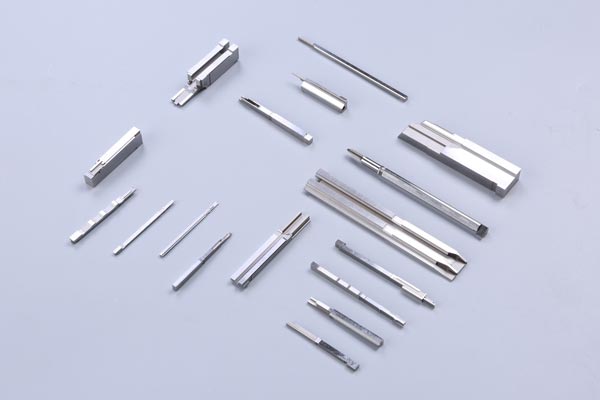
Stainless steel precision parts are components manufactured through high-tolerance machining processes such as CNC turning, milling, Swiss-type machining, grinding, and EDM. Unlike standard parts, these components are produced to extremely tight specifications—often within microns—to ensure seamless integration into complex assemblies.
Stainless steel contains a minimum of 10.5% chromium, which forms a passive oxide layer that prevents rust and corrosion. When paired with precision machining, this material delivers parts that perform reliably in harsh environments, including exposure to chemicals, moisture, high temperatures, and repeated sterilization cycles.
Key Applications Across Industries
Medical and Surgical Equipment
The medical sector relies heavily on stainless steel precision parts because of the material's biocompatibility, ease of sterilization, and resistance to bodily fluids. Surgical instruments, implantable components, dental hardware, and diagnostic equipment all require stainless steel machining that meets stringent medical standards such as ISO 13485.
Semiconductor and Electronics
In semiconductor manufacturing, even microscopic contamination can ruin production runs. Stainless steel components—particularly electropolished grades—are used in vacuum chambers, gas delivery systems, wafer handling equipment, and testing fixtures. The non-magnetic and corrosion-resistant properties of certain stainless steel grades make them ideal for cleanroom environments.
Food and Beverage Processing
Equipment in the food and beverage industry must withstand frequent washdowns, acidic ingredients, and high-pressure cleaning. Stainless steel precision parts are the standard for pumps, valves, fittings, conveyor components, and mixing equipment because they resist corrosion from water, detergents, and food acids while meeting FDA hygiene requirements.
Aerospace and Defense
Aerospace applications demand components that maintain strength at extreme temperatures and resist corrosion from fuel, salt spray, and atmospheric conditions. Precipitation-hardened stainless steel grades such as 17-4 PH are commonly machined for structural brackets, fasteners, landing gear components, and sensor housings.
Common Stainless Steel Grades for Precision Machining
Not all stainless steel is created equal. Selecting the right grade is critical to achieving both performance and machinability.
303 Stainless Steel
Known as the free-machining grade, 303 contains added sulfur that improves chip flow during CNC machining. It is widely used for shafts, bushings, fittings, and other components where machinability takes priority over maximum corrosion resistance.
304 and 304L Stainless Steel
The most versatile austenitic grade, 304 offers excellent corrosion resistance and good formability. The low-carbon variant (304L) is preferred for welded components because it reduces carbide precipitation and maintains corrosion resistance after welding.
316 and 316L Stainless Steel
With the addition of molybdenum, 316 offers superior corrosion resistance—particularly against chlorides and marine environments. It is the standard choice for marine hardware, chemical processing equipment, pharmaceutical machinery, and high-purity applications.
17-4 PH Stainless Steel
This precipitation-hardening grade combines high strength, hardness, and corrosion resistance. It is machined in its softened condition and then heat-treated to achieve mechanical properties that rival many carbon steels while retaining stainless characteristics. Common applications include aerospace components, valve seats, and high-strength fasteners.
The Stainless Steel Machining Process
Producing high-quality stainless steel precision parts requires a controlled process that accounts for the material's unique characteristics. Stainless steel tends to work-harden, generate heat during cutting, and produce long, stringy chips—all of which demand specialized tooling and parameters.
Modern precision machining shops use multi-axis CNC centers, Swiss-type lathes, and precision grinding equipment to achieve tight tolerances. The process typically begins with material selection, followed by CAM programming, first-article inspection, batch production, and final quality verification. Advanced shops also offer secondary operations such as passivation, electropolishing, laser marking, and surface finishing to meet specific application requirements.
Why Precision Matters in Stainless Steel Components
In mission-critical applications, even minor dimensional deviations can cause assembly failures, leaks, reduced service life, or safety hazards. Precision machining ensures that parts fit consistently, seals perform reliably, and interchangeability is maintained across production runs.
Tolerances of ±0.005 mm or tighter are achievable with experienced stainless steel machining partners. This level of precision is essential for components such as hydraulic valve spools, optical alignment parts, sealing surfaces, and miniature medical components.
Selecting a Stainless Steel Machining Partner
When choosing a manufacturer for stainless steel precision parts, consider the following factors:
- Industry experience: A shop with experience in your sector understands the relevant standards, material grades, and documentation requirements.
- Quality systems: Look for ISO 9001 certification, and for regulated industries, ISO 13485 or AS9100 accreditation.
- Capabilities: Ensure the shop offers the machining processes your parts require, including multi-axis CNC, Swiss turning, grinding, and EDM.
- Inspection equipment: CMM (coordinate measuring machine), optical comparators, and surface roughness testers demonstrate a commitment to quality verification.
- Material traceability: Reputable suppliers provide material certificates (Mill Test Reports) confirming grade, chemistry, and mechanical properties.
Conclusion
Stainless steel precision parts are a cornerstone of modern manufacturing across medical, semiconductor, food processing, aerospace, and many other industries. The combination of corrosion resistance, mechanical strength, and biocompatibility makes stainless steel uniquely valuable, while advanced stainless steel machining techniques enable the tight tolerances these applications demand. Whether you are developing a new product or optimizing an existing supply chain, partnering with an experienced precision machining provider is essential to achieving consistent, reliable, and cost-effective results.
Frequently Asked Questions
Q: What is the difference between 304 and 316 stainless steel for precision parts? A: The primary difference is the addition of molybdenum in 316, which significantly enhances corrosion resistance—especially against chlorides and marine environments. 304 is sufficient for general-purpose applications, while 316 is preferred for chemical processing, marine hardware, pharmaceutical equipment, and high-humidity settings.
Q: What tolerances can be achieved with stainless steel machining? A: With CNC machining, Swiss turning, and precision grinding, tolerances as tight as ±0.005 mm (±0.0002 inches) are achievable for suitable geometries. The actual tolerance depends on part complexity, material grade, feature size, and the specific machining process used.
Q: Is passivation necessary after machining stainless steel parts? A: Passivation is recommended to remove free iron and contaminants from the surface and restore the passive chromium oxide layer. It improves long-term corrosion resistance and is often required for medical, food, and high-purity applications. The process is typically performed in accordance with ASTM A967 or AMS 2700 standards.
Q: Can stainless steel precision parts be produced in low volumes? A: Yes. Most precision machining shops support low to medium production volumes, including prototype runs. CNC machining is well-suited for small-batch production because it requires minimal setup cost and allows design modifications without retooling. Lead times for prototype parts typically range from one to two weeks.
Q: What surface finishes are available for stainless steel machined parts? A: Common finishes include as-machined, bead blasted, polished, electropolished, and passivated. Electropolishing provides a smooth, corrosion-resistant surface that is easy to clean and often used in medical and food-grade applications. Surface roughness values as low as Ra 0.4 µm can be achieved through precision grinding and polishing.


Request A Quote
We offer one-stop consulting services from design to mass production, ready to answer your questions anytime!


In This Article
Related Posts
Stainless Steel Precision Parts: A Complete Guide to Stainless Steel Machining
2026-11-02
What to Pay Attention to When Machining Tungsten Carbide
2026-10-30
Stainless Steel Precision Parts: A Complete Guide for Modern Manufacturing
2026-10-27
When Is a Hot Runner System Essential for Plastic Mold Manufacturing?
2026-10-22


