


 >


When Is a Hot Runner System Essential for Plastic Mold Manufacturing?
By hqt
Oct 22, 2026
Related Posts

Stainless Steel Precision Parts: A Complete Guide to Stainless Steel Machining
2026-11-02<

What to Pay Attention to When Machining Tungsten Carbide
2026-10-30<

Stainless Steel Precision Parts: A Complete Guide for Modern Manufacturing
2026-10-27<

When Is a Hot Runner System Essential for Plastic Mold Manufacturing?
2026-10-22<
In injection mold design, the choice of gating system often determines a project's success more than it first appears. Cold runner systems are simple and cost-effective, but they inherently waste runner scrap and limit gate placement. Hot runner systems require a higher upfront investment, yet they deliver systematic returns in material utilization, cycle time, product quality, and automation readiness. Understanding when mold manufacturing must use a hot runner is essentially answering one question: has the product portfolio and production method pushed past the cost advantage of a cold runner?
1. The Value Proposition of Hot Runner Systems
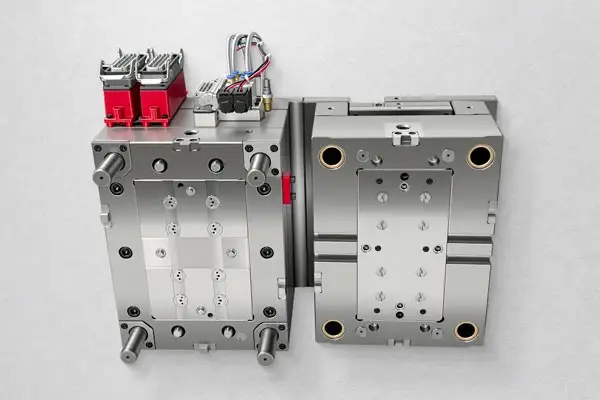
A hot runner system keeps the melt in a molten, flowable state from the machine nozzle to the cavity through internally heated channels, so no runner scrap is produced after molding and the melt enters the cavity directly through the hot drops. Compared with cold runners, its core value lies in three areas: zero runner waste, shorter cycle times, and greater freedom in gate placement. In addition, because no cold slug enters the cavity, injection pressure and clamping force are used more efficiently, resulting in better part density, dimensional stability, and surface quality.
Therefore, the decision on whether a hot runner is mandatory should not be based on the mold price alone, but on the total cost across the entire production chain.
2. Typical Scenarios Where a Hot Runner Is a Must
2.1 High-Volume, High-Cadence Continuous Production
When a single mold produces hundreds of thousands of parts per year or more, runner scrap from a cold runner multiplies with output. In products such as bottle caps, daily-care packaging, and consumer electronics housings, individual part weight is small but volumes are huge, so runner scrap represents a significant share of material. The accumulated material loss, plus the labor and energy for regrinding and recycling, directly erodes margins. With a hot runner, runner scrap is eliminated, and combined with short-cycle automated production, the cost per part drops significantly.
2.2 High-Cavitation Precision Molds
Products such as connector terminals, medical pipette tips, and light guides often require dozens or even more than a hundred cavities. High-cavitation molds are extremely sensitive to runner balance; a cold runner can hardly maintain consistent filling pressure and temperature across all cavities. A hot runner, by contrast, allows independent temperature control and gate adjustment per zone, ensuring consistent filling in every cavity and, fundamentally, stable yield and batch-to-batch consistency. This is the fundamental reason why high-cavitation precision molds treat hot runners as the standard.
2.3 Thin-Walled, Micro, and Precision Injection-Molded Parts
Precision plastic parts in medical, semiconductor, and optical communication applications — such as microfluidic chips, optical lenses, semiconductor trays, and fiber-optic connector housings — are typically thin-walled, micro-sized, and held to tight tolerances. A cold runner's cold slug entering the cavity can cause flow marks, cold material defects, and short shots. A hot runner delivers melt into the cavity at near-melt temperature, providing stable filling and significantly reducing internal stress and warpage, which meets the processing window required for high-precision molding.
2.4 Large and Deep-Cavity Structural Parts
Large parts such as automotive bumpers, instrument panels, appliance housings, and returnable containers are bulky and have long flow paths. With a cold runner, gate placement is limited by the parting line, often requiring multiple gating points, and the large runner scrap takes a long time to cool, directly extending the cycle. A hot runner allows gates to be positioned at any advantageous location inside the mold for balanced multi-point filling, shortening the flow distance, reducing clamping force requirements and internal stress, and eliminating the headache of recycling large runner scrap.
2.5 Parts with Strict Appearance and Gate-Mark Requirements
Appliance panels, automotive interiors, and premium consumer goods demand flawless appearance, and the gate marks left by cold runners often require post-molding deflashing and polishing. With a hot runner — particularly valve-gated hot drops — the gate closes automatically, leaving a smooth, well-concealed gate mark, enabling deflashing-free continuous production when combined with in-mold trimming and robots. For downstream processes such as electroplating, painting, and IML, the surface consistency delivered by hot runner molding also provides a greater guarantee.
2.6 Specialty Engineering Plastics and Highly Filled Materials
High-performance materials such as glass-fiber reinforced, carbon-fiber reinforced, flame-retardant, LCP, PEEK, PFA, and PTFE compounds are extremely sensitive to shear heat and temperature control. These materials vary widely in flowability, and in a cold runner the melt can cool or stagnate in the channel, causing fiber orientation disorder, degradation, burning, or short shots. A hot runner precisely controls melt temperature and maintains a stable shear state — an essential condition for stable molding of high-performance materials. For PFA and PTFE tubing and precision components commonly used in semiconductor and medical applications, their high-temperature, high-viscosity, and degradation-prone nature makes a hot runner almost a prerequisite for process feasibility.
2.7 Fully Automated and Lights-Out Production
Automotive, medical, and electronics industries are widely adopting automated production lines in which injection molding machines operate continuously alongside robots, in-mold trimming, and vision inspection. A cold runner requires manual removal and sorting of runner scrap, interrupting the automated cadence. A hot runner produces no scrap and can be linked directly to robots for true lights-out continuous production, significantly reducing labor dependence and quality fluctuation.
3. When a Hot Runner Is NOT the Right Choice
A hot runner is not the optimal solution in every case. The following situations call for careful evaluation:
- Low-volume, high-mix projects with frequent mold changes, where the payback period for a hot runner investment is too long and color and material changeovers become more cumbersome;
- Single-cavity simple parts with low-cost materials and limited volume, where a cold runner delivers lower total cost;
- Heat-sensitive materials with a narrow processing window (e.g., PVC), where melt residence in the hot runner can cause decomposition and discoloration — special design is required, or a hot runner should be avoided;
- Companies lacking hot runner maintenance capability and spare-parts inventory, where downtime risk can offset efficiency gains.
4. Key Control Points in Hot Runner Mold Manufacturing
What determines the success of a hot runner is not just whether to use one, but how it is built and controlled:
- Runner balance design: For multi-cavity and multi-point gating, flow-channel geometry and hot-drop selection must be optimized through mold flow analysis to ensure consistent filling and packing;
- Temperature control accuracy: Thermocouple placement, heater watt density, and controller response speed directly determine melt temperature stability — especially critical for PFA, PTFE, and LCP;
- Hot-drop and gate selection: Choose valve-gated, shut-off, or open-gate nozzles based on material characteristics, gate-mark requirements, and automation level;
- Materials and manufacturing processes: Key components such as the manifold and hot drops require appropriate mold steel with heat treatment and coatings to balance wear resistance, corrosion resistance, and thermal conductivity;
- Trial molding and maintenance system: Establish temperature records, regular maintenance, and seal replacement schedules — this is the guarantee for long-term stable hot runner operation.
5. FAQ
Q1: What is the fundamental difference between a hot runner and a cold runner? A: In a cold runner system, the runner scrap is ejected together with the part after molding, producing waste. A hot runner keeps the melt in the channels molten through heating, generating no runner scrap, offering more flexible gate placement and shorter cycle times.
Q2: Can a hot runner be used for low-volume production? A: Yes, but it requires a comprehensive evaluation. When volumes are small, product mix is high, and color changes are frequent, the investment and changeover and maintenance costs are difficult to amortize, so a cold runner is usually more economical. A hot runner's advantages become evident only when output is stable and volume is large enough.
Q3: What is the service life and maintenance cost of hot runner molds? A: Hot runners have a higher initial investment than cold runners, but the core hot drops and temperature controllers have long service lives. The key is to establish a regular maintenance and temperature-calibration schedule. A well-maintained hot runner system can operate stably for years, with total cost of ownership lower than a cold runner plus runner-scrap recycling combination.
Q4: Which materials are not suitable for hot runners? A: Heat-sensitive materials with a narrow processing window (such as PVC) and materials prone to degradation during stagnation in the runner should be carefully evaluated. High-temperature, high-viscosity materials such as PFA, PTFE, and LCP, on the other hand, actually rely on the precise temperature control of hot runners, but they require targeted selection and trial-run validation.
Q5: How do I decide whether a project should use a hot runner? A: Evaluate six dimensions: annual volume, cavity count, part precision, appearance requirements, material characteristics, and automation level. Projects with high volume, high cavity counts, tight tolerances, strict appearance requirements, specialty materials, or automated lines should prioritize hot runners.
Conclusion
A hot runner is not an optional add-on on a mold quotation; it is part of a production strategy. For plastic mold manufacturing that targets high volume, high precision, and high-performance materials, adopting a hot runner has shifted from optional to mandatory. For low-volume, low-value-added simple products, a cold runner remains the pragmatic choice. By conducting a systematic evaluation of product structure and production methods at the project stage, manufacturers can find the optimal balance among efficiency, quality, and cost.


Request A Quote
We offer one-stop consulting services from design to mass production, ready to answer your questions anytime!


In This Article
Related Posts
Stainless Steel Precision Parts: A Complete Guide to Stainless Steel Machining
2026-11-02
What to Pay Attention to When Machining Tungsten Carbide
2026-10-30
Stainless Steel Precision Parts: A Complete Guide for Modern Manufacturing
2026-10-27
When Is a Hot Runner System Essential for Plastic Mold Manufacturing?
2026-10-22


