


 >
>


Trends in the Tungsten Carbide Cylinder Parts Industry: High-End and Green Transformation Driven by Technology

Related Posts

How to Improve Precision Cutting Efficiency: A Full-Link Solution for Process Optimization and Intelligent Manufacturing
2026-09-18<

CNC Prototype Machining Guide: Turning Concepts into Precision Parts
2026-09-15<

How CNC Achieves Micron Accuracy
2026-09-08<

Precision Machined Components Corrosion Control Guide
2026-09-03<
Tungsten carbide cylinder parts, as a crucial branch of cemented carbide, have become core materials in high-end equipment manufacturing such as aerospace, new energy vehicles, and semiconductor fabrication due to their high hardness, wear resistance, and high-temperature resistance. As the global manufacturing industry shifts towards intelligence and greenness, the tungsten carbide cylinder parts industry is undergoing a profound transformation from traditional processing to high-precision, high-performance, and green directions.
I. Demand Structure: Explosive Growth in Emerging Industries Drives High-End Upgrades
1. Surge in Demand in the New Energy Vehicle and Semiconductor Sectors
The demand for lightweight and high-precision processing of components such as new energy vehicle motors and battery pack casings is driving rapid growth in the high-end tungsten carbide tool market. For example, battery electrode sheet stamping dies require tungsten carbide cylinder parts with dimensional accuracy of ±0.001 mm and surface finish of Ra0.2 or better. The demand for ultra-fine tungsten wire for wafer cutting in the semiconductor industry is growing exponentially, with its high strength and low resistance being key to improving silicon wafer cutting efficiency. It is projected that the compound annual growth rate of global photovoltaic tungsten wire demand will reach 40% from 2025 to 2028, with demand potentially exceeding 30,000 tons by 2030.
2. Continuous Expansion of Demand in the Aerospace and Energy Sectors
High-temperature alloy components for aerospace engines, deep-sea oil and gas drilling tools, and other extreme operating conditions place higher demands on the high-temperature resistance and impact resistance of tungsten carbide cylinder parts. For example, the C919 large aircraft program is expected to deliver 3,000 units over the next 10 years, requiring 6-9 million high-precision tungsten carbide punches alone. The strategic value of tungsten carbide in frontier fields such as nuclear fusion devices and hydrogen energy storage and transportation has yet to be fully unlocked but has already attracted significant industry attention.
3. Upgrading of Traditional Manufacturing Expands Application Boundaries
Industries such as mold manufacturing and mining machinery are further expanding the application boundaries of tungsten carbide cylinder parts through material substitution and process optimization. For example, in the mining machinery sector, high-wear-resistant tungsten carbide drill bits can improve mining efficiency by over 30%; in mold manufacturing, ultra-fine-grained tungsten carbide molds have a service life five times longer than traditional materials.
II. Technological Evolution: Material Innovation and Smart Manufacturing Reshape the Industrial Landscape
1. Material End: Ultra-Fine Grains and Gradient Structures Become Mainstream
By using nanotechnology to refine carbide grain sizes to below 0.2 microns, hardness and toughness can be synergistically improved to meet the needs of precision machining and micro-tools. For example, Hunan Boyun Oriental Powder Metallurgy Co., Ltd. has developed nano-cemented carbide with an average WC grain size of 0.11 μm and a transverse rupture strength exceeding 5,100 MPa, reaching international leading levels. Gradient structure design significantly enhances tool life by combining a high-hardness surface layer with a strong and tough core, such as in deep-sea drilling tools where gradient tungsten carbide components exhibit 40% better impact resistance.
2. Coating Technology: Multi-Layer Composites and Smart Responses Become New Directions
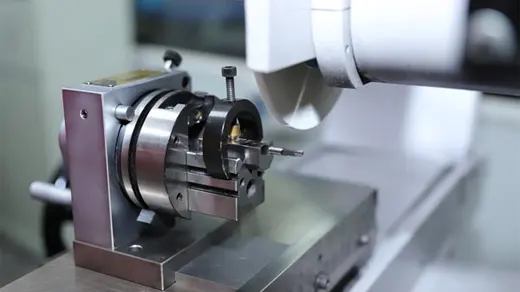
The localization breakthroughs in chemical vapor deposition (CVD) and physical vapor deposition (PVD) coating processes have extended tool life by several times. For example, an AI PCB ultra-long-diameter precision micro-tool production line invested in by a subsidiary of China Tungsten High-Tech has tripled tool life through multi-layer nanostructure coating technology. Smart-responsive coatings that automatically adjust hardness based on the machining environment are becoming the "golden touch" in high-end manufacturing.
3. Smart Manufacturing: Digital Twins Reconstruct Production Modes
By establishing material performance databases and machining process parameter models, enterprises can provide customers with full-chain solutions from material selection to process optimization. For example, Xiamen Golden Egret Special Alloy Co., Ltd. uses IoT technology to monitor tool wear in real time, creating significant value for customers. Digital twin technology enables the unification of personalized customization and large-scale production, such as how Zhuzhou Diamond Cutting Tools Co., Ltd. has shortened the R&D cycle by 50% through AI algorithms to optimize tool geometry parameters.
III. Competitive Landscape: Leading Enterprises Lead Ecological Transformation
1. Leading Enterprises: Vertical Integration Builds Closed-Loop Ecosystems
Leading enterprises such as China Tungsten High-Tech and Xiamen Tungsten have formed closed-loop ecosystems of "resources-materials-tools-services" by controlling upstream tungsten ore resources, deploying deep-processing links, and expanding downstream application scenarios. For example, a subsidiary of China Tungsten High-Tech has increased market concentration (CR5) to over 32% through mergers and acquisitions to integrate regional production capacity; Xiamen Tungsten relies on a complete tungsten industry chain layout in Xiamen, Fujian, and Jiujiang, Jiangxi, to achieve integrated operations from tungsten ore mining and selection to deep processing.
2. SMEs: Differentiate and Break Through in Niche Markets
SMEs occupy a place in niche markets such as medical dental drills and precision molds for consumer electronics through rapid response capabilities and customized services. For example, Hunan Boyun Oriental Powder Metallurgy Co., Ltd. has become a key supplier for shield machines and aerospace fields with its high-end nano-cemented carbide technology; Dongguan Jinggong Mold Hardware Co., Ltd. meets the rapid iteration needs of regional markets by shortening delivery cycles to within 7 days through digital transformation.
3. International Competition: Technology Export and Standard Setting Become New Foci
European and American countries have classified tungsten as critical mineral and are accelerating the construction of domestic supply chains. However, due to resource endowment and technological accumulation constraints, overseas enterprises are unlikely to replace China's dominant position in the short term. This provides Chinese enterprises with opportunities for "technology export + standard setting." For example, some enterprises have taken the lead in formulating the "Technical Specification for High-Purity Tungsten Targets," which has become an access standard for the global semiconductor supply chain.
IV. Green Transformation: Circular Economy Becomes an Inevitable Choice
1. Recycling Value of Scrap Tungsten Carbide Becomes Prominent
As constraints on primary ore resources tighten, the value of recycling scrap tungsten carbide becomes increasingly prominent. By improving recycling technologies and completing industrial chain layouts, enterprises can not only reduce dependence on primary ores but also meet the ESG requirements of downstream customers through carbon footprint certification. For example, Xiamen Tungsten has increased the recycling rate of scrap tungsten to over 40% through vacuum distillation technology and expects the proportion of recycled tungsten raw materials to reach 40% by 2026.
2. Low-Carbon Processes Become Core Competitiveness
Low-carbon sintering processes and wastewater recycling technologies have become research priorities. For example, China Tungsten High-Tech has achieved "near-zero emissions" in the tungsten smelting process by adopting a closed-loop water circulation system and waste gas treatment devices; an enterprise in Zhuzhou, Hunan, has obtained national green factory certification by reducing unit product energy consumption by 20% through low-carbon preparation processes.
V. Future Outlook: From a "Tungsten Resource Powerhouse" to a "Tungsten Technology Powerhouse"
1. Continuous Expansion of Market Scale
It is projected that the global market size for tungsten carbide cylinder parts will exceed 9 billion yuan by 2030, with a compound annual growth rate stable at over 10%. High-end products will account for over 60% of the market, forming a healthier and more orderly competitive landscape.
2. Technological Barriers Become Core Moats
Breakthroughs in ultra-fine grain technology, gradient structure design, smart coating technology, and other fields will determine an enterprise's position in the global industrial chain. For example, technology leaders will occupy over 90% of the market share in frontier fields such as tungsten components for nuclear fusion devices and high-temperature alloy tools for large aircraft manufacturing.
3. Globalization Layout Accelerates
Leading enterprises are accelerating the construction of global supply chains through overseas factory construction, mergers and acquisitions, and other means while actively participating in international standard setting to enhance their voice. For example, China Tungsten High-Tech has established production bases in Vietnam and Mexico to circumvent trade barriers; Xiamen Tungsten has established a joint laboratory with Germany's H.C. Starck to jointly develop tungsten carbide materials for aerospace engines.
FAQ


Request A Quote
We offer one-stop consulting services from design to mass production, ready to answer your questions anytime!


In This Article
Related Posts
How to Improve Precision Cutting Efficiency: A Full-Link Solution for Process Optimization and Intelligent Manufacturing
2026-09-18
CNC Prototype Machining Guide: Turning Concepts into Precision Parts
2026-09-15
How CNC Achieves Micron Accuracy
2026-09-08
Precision Machined Components Corrosion Control Guide
2026-09-03


