


 >
>


The Critical Role of Precision Medical Components
By hqt
Jul 30, 2026
Related Posts

Low Volume CNC Machining Guide
2026-09-21<

How to Improve Precision Cutting Efficiency: A Full-Link Solution for Process Optimization and Intelligent Manufacturing
2026-09-18<

CNC Prototype Machining Guide: Turning Concepts into Precision Parts
2026-09-15<

How CNC Achieves Micron Accuracy
2026-09-08<
Precision-machined components form the backbone of life-critical medical devices, where dimensional accuracy, material integrity, and surface quality directly impact patient safety and clinical outcomes. From minimally invasive surgical tools to implantable devices and diagnostic systems, these components demand tolerances as tight as ±0.001 mm and surface finishes below Ra 0.1 μm to ensure flawless functionality under sterilization and long-term physiological exposure.
Surgical Instruments and Minimally Invasive Tools
High-precision CNC-machined components are essential in laparoscopic graspers, endoscopic scissors, and robotic-assisted surgical arms. These parts require burr-free edges, consistent hardness, and corrosion-resistant surfaces to withstand repeated sterilization cycles—especially when fabricated from 316L stainless steel or titanium alloys. Any micro-deformation or surface inconsistency can compromise tissue handling or lead to instrument failure during critical procedures.
Implantable Devices and Orthopedic Components
Medical implants—including spinal cages, hip stems, and cranial plates—are typically machined from biocompatible materials such as titanium Grade 5, cobalt-chromium alloys, and PEEK. These components must meet ISO 10993 biocompatibility standards and maintain structural integrity under cyclic loading. Precision machining enables complex geometries with porous surfaces for osseointegration, while maintaining sub-micron dimensional control to ensure proper fit and long-term performance within the human body.
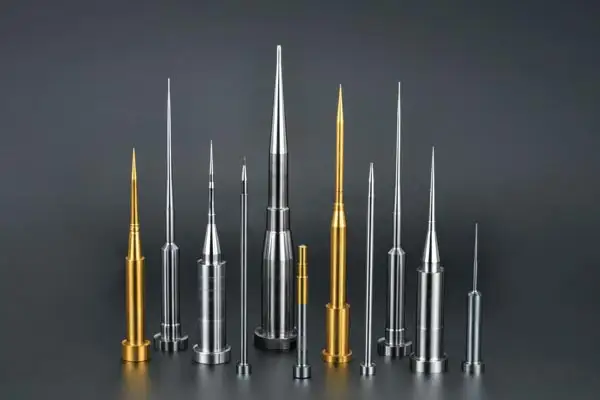
Diagnostic and Imaging Equipment Parts
Precision-machined housings, fluidic channels, and sensor mounts in MRI machines, CT scanners, and point-of-care diagnostic devices require electromagnetic shielding, vibration damping, and ultra-clean surfaces. Components made from non-magnetic stainless steel or engineered polymers must be free of particulate contamination to avoid image artifacts or sample cross-contamination in lab-on-a-chip systems.
Sterilization Resistance and Material Compatibility
Medical machining suppliers must select materials and processes that endure repeated exposure to autoclaving, gamma radiation, and ethylene oxide. Surface treatments such as electropolishing and passivation are often applied to enhance corrosion resistance and reduce bacterial adhesion. The machining process itself must not introduce residual stresses or micro-cracks that could compromise component longevity under sterilization cycles.
Regulatory Compliance and Quality Assurance
Compliance with ISO 13485 and the FDA’s QMSR (21 CFR 820) is non-negotiable. Every machined part must be traceable through lot numbers, process parameters, and inspection records. Full documentation of material certifications, dimensional checks, and cleaning validation is required for regulatory submissions and audit readiness. A robust quality management system ensures that each component meets the stringent demands of global medical markets.
Leveraging Dongguan’s Industrial Ecosystem for Medical Machining
Located in Dongguan, Guangdong—China’s largest precision manufacturing hub—Yize Mould benefits from a dense network of high-precision CNC suppliers, specialized material distributors, and metrology labs. This localized ecosystem enables rapid prototyping, same-day tooling adjustments, and 24/7 technical support, reducing time-to-market for global medical OEMs. Proximity to key logistics ports further ensures reliable, cost-effective global delivery.
Why Choose Yize Mould?
Dongguan Yize Mould Co., Ltd. (Yize Mould), established in 2005 and headquartered in Chang’an Town, Dongguan, is a certified medical device machining supplier with ISO 13485 accreditation and Class 1000/10,000 cleanroom machining capabilities. We specialize in high-tolerance CNC machining of titanium, 316L stainless steel, PEEK, LCP, and other biocompatible materials for surgical instruments, implants, and diagnostic equipment. With machining accuracy of ±0.001 mm, full process traceability, and a team of senior engineers with international medical project experience, we deliver not just parts—but validated, audit-ready manufacturing systems trusted by global medical device companies.
We don’t just machine components—we engineer compliance into every step, from design review to final inspection, ensuring your products meet FDA, CE MDR, and NMPA requirements without compromise.
Frequently Asked Questions (FAQ)
Q1: Is ISO 13485 certification required for a medical device machining supplier?
A: Yes. ISO 13485 is the globally recognized standard for medical device quality management systems. It covers design, machining, inspection, and documentation processes. Most international medical OEMs require suppliers to hold valid ISO 13485 certification to ensure supply chain compliance and audit readiness.
Q2: What materials are commonly machined for medical devices?
A: Common materials include titanium Grade 5, 316L stainless steel, PEEK, LCP, PPSU, and cobalt-chromium alloys. These are selected for biocompatibility (ISO 10993), mechanical strength, and sterilization resistance. All materials must be accompanied by certified material test reports.
Q3: Can you support small batch or prototype runs for medical devices?
A: Yes. We specialize in low-volume, high-mix production for prototypes, clinical trial components, and niche medical devices. Our flexible CNC systems and rapid setup protocols allow for cost-effective small batch runs without compromising quality or documentation standards.
Q4: How do you ensure traceability of machined medical parts?
A: Each component is assigned a unique lot and serial number. We maintain digital records of raw material certificates, CNC program versions, inspection reports, and cleaning validation logs. All data is archived for a minimum of 10 years to support regulatory audits and post-market surveillance.
Q5: Do you provide documentation for FDA or CE MDR submissions?
A: Yes. We supply comprehensive technical documentation including material certifications, process validation reports, cleaning validation records, and dimensional inspection certificates—all formatted to meet FDA 21 CFR Part 820 and EU MDR Annex I requirements.


Request A Quote
We offer one-stop consulting services from design to mass production, ready to answer your questions anytime!


