


 >
>


Low Volume CNC Machining Guide
By hqt
Sep 21, 2026
Related Posts

Low Volume CNC Machining Guide
2026-09-21<

How to Improve Precision Cutting Efficiency: A Full-Link Solution for Process Optimization and Intelligent Manufacturing
2026-09-18<

CNC Prototype Machining Guide: Turning Concepts into Precision Parts
2026-09-15<

How CNC Achieves Micron Accuracy
2026-09-08<
Introduction
In today's fast-paced manufacturing landscape, low volume CNC machining has emerged as a critical solution for businesses seeking to bridge the gap between prototyping and full-scale production. Whether you are launching a new product, testing market response, or requiring custom components for specialized equipment, small-batch CNC production offers unmatched flexibility, cost efficiency, and rapid turnaround. This guide explores the fundamentals of low volume CNC production, its key advantages, material options, quality considerations, and how partnering with an experienced precision manufacturer like Dongguan Yize Mould Co., Ltd can elevate your production strategy.
Understanding Low Volume CNC Production
What Is Low Volume Machining?
Low volume machining refers to the CNC manufacturing process that produces parts in quantities typically ranging from 1 to 10,000 units. Unlike mass production, which relies on high-cost tooling and long setup times optimized for hundreds of thousands of pieces, small-batch CNC manufacturing leverages advanced CNC mills, lathes, EDM machines, and multi-axis machining centers to deliver precision parts without the overhead of dedicated production lines.
This production model is particularly valuable for industries such as aerospace, medical devices, automotive, electronics, and industrial automation, where product complexity is high, design iterations are frequent, and demand volumes do not justify full-scale tooling investments.
Why Low Volume CNC Production Matters
The manufacturing sector is undergoing a profound shift toward customization and speed-to-market. Several factors drive the growing demand for low volume CNC machining services:
- Accelerated product development cycles: Companies need functional prototypes and pre-production parts quickly to validate designs and meet launch deadlines.
- Niche market requirements: Many products serve specialized markets where demand is measured in hundreds or thousands of units, not millions.
- Supply chain resilience: Diversifying production through smaller batch sizes reduces inventory risk and allows businesses to respond to market fluctuations more agilely.
- Design iteration flexibility: Low volume production enables engineering teams to refine designs between batches, incorporating feedback without incurring excessive retooling costs.
Key Advantages of Low Volume CNC Machining
Cost Efficiency Without Compromise
One of the most compelling benefits of low volume machining is its cost structure. Traditional high-volume manufacturing demands substantial upfront investment in hard tooling, fixtures, and production line setup—costs that can only be amortized across large production runs. In contrast, CNC low volume production uses soft tooling and universal fixturing, dramatically reducing initial capital expenditure. For quantities under 10,000 pieces, the per-unit cost is frequently lower than what mass production would offer when factoring in tooling amortization and inventory carrying costs.
Dongguan Yize Mould Co., Ltd specializes in optimizing production workflows for small to medium batch sizes. Their engineering team carefully plans each job to minimize setup time, select optimal tool paths, and reduce material waste, ensuring that every project delivers maximum value.
Rapid Turnaround and Market Speed
Time is a decisive competitive factor in modern industry. Low volume CNC production dramatically compresses lead times by eliminating the tool design and fabrication phases that precede traditional manufacturing runs. With CNC machining, production can begin within days of final design approval, enabling businesses to:
- Get products to market faster than competitors
- Respond quickly to customer orders and urgent requests
- Test market demand before committing to larger production volumes
- Meet tight regulatory submission deadlines in medical and aerospace sectors
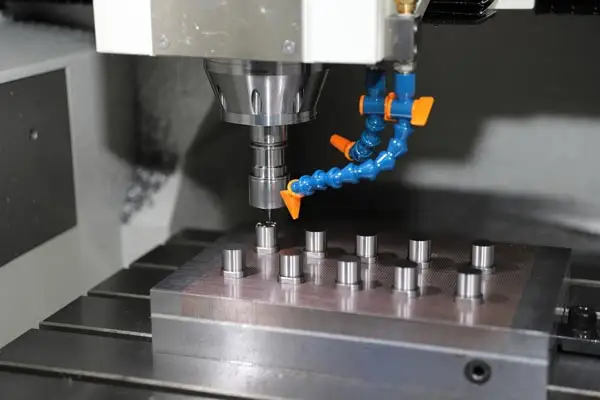
Dongguan Yize Mould Co., Ltd maintains a substantial fleet of advanced CNC equipment and a skilled workforce operating across multiple shifts, enabling them to deliver high-quality precision parts in as little as 3 to 15 working days, depending on part complexity and volume.
Design Flexibility and Iteration Capability
Product design is rarely a one-and-done process. Engineers continuously refine designs based on testing results, customer feedback, and performance data. Low volume machining services are inherently suited to this iterative approach because each production batch can incorporate design improvements without the penalty of scrapping expensive hard tooling.
This flexibility is especially critical for startups and innovative companies that thrive on rapid iteration. By working with a precision CNC partner like Dongguan Yize Mould Co., Ltd, design teams can implement changes quickly, test multiple design variants in parallel, and arrive at an optimized final product faster than would be possible with traditional manufacturing approaches.
Superior Quality and Precision
CNC machining is renowned for its exceptional precision and repeatability. Modern multi-axis CNC machines achieve tolerances as tight as ±0.005mm, surface finishes down to Ra 0.8μm, and consistent part-to-part uniformity that manual processes simply cannot match. For low volume production, this level of precision is maintained across every unit, regardless of batch size.
Quality assurance is not an afterthought at Dongguan Yize Mould Co., Ltd—it is embedded in every stage of production. Their quality control team uses coordinate measuring machines (CMM), optical comparators, surface roughness testers, and hardness testers to verify that each part meets exact specifications before shipment. Full inspection reports are available upon request, giving customers complete confidence in every batch.
Materials and Processes for Low Volume CNC Production
Common Materials Used in Small-Batch CNC Machining
The versatility of low volume CNC machining extends to the wide range of materials that can be processed. Choosing the right material is essential for achieving the desired mechanical properties, surface finish, and cost targets:
Metals:
- Aluminum alloys (6061, 7075, 5052): Lightweight, excellent machinability, and good corrosion resistance make aluminum the most popular choice for low volume production.
- Stainless steel (303, 304, 316, 17-4 PH): Superior corrosion resistance and mechanical strength for medical, food processing, and marine applications.
- Carbon steel and alloy steel: High strength and wear resistance for structural components and tooling.
- Brass and copper: Excellent electrical conductivity and corrosion resistance for electronic and plumbing components.
- Titanium: Exceptional strength-to-weight ratio and biocompatibility for aerospace and medical implants.
Engineering Plastics:
- ABS, POM (Delrin), nylon, PEEK, PC, acrylic, and PTFE are commonly machined for functional prototypes, jigs and fixtures, and end-use components where weight reduction or chemical resistance is required.
Dongguan Yize Mould Co., Ltd maintains strategic relationships with certified material suppliers, ensuring consistent material quality and traceability. Their engineering team can recommend optimal material selections based on your application requirements, environmental conditions, and budget constraints.
Advanced CNC Processes Available
Low volume CNC production encompasses a range of precision machining processes, each suited to different part geometries and requirements:
- CNC Milling: Using 3-axis, 4-axis, and 5-axis machining centers to produce complex prismatic shapes, pockets, cavities, and contoured surfaces.
- CNC Turning: Producing rotational parts with high precision on CNC lathes, including live tooling capabilities for combined milling and turning operations.
- Wire EDM and Sinker EDM: Machining hard materials and intricate internal features with exceptional accuracy, ideal for mold components and precision parts.
- Surface Grinding and Lapping: Achieving ultra-precise flatness, parallelism, and surface finish for critical sealing surfaces and mating components.
- Swiss Machining: Producing small, high-precision cylindrical parts with tight tolerances for medical devices and electronics.
The breadth of capabilities at Dongguan Yize Mould Co., Ltd means that even the most complex low volume projects can be completed in-house, reducing lead times and ensuring consistent quality across all operations.
Surface Finishing and Secondary Operations
Beyond basic machining, low volume CNC parts often require surface treatments and secondary operations to meet functional or aesthetic requirements. Dongguan Yize Mould Co., Ltd offers a comprehensive range of finishing options:
Decorative and Protective Finishes:
- Anodizing (Type II and Type III) for aluminum parts, available in various colors
- Powder coating and painting for aesthetic and protective purposes
- Electroplating: zinc plating, nickel plating, chrome plating, gold plating
- Passivation and electropolishing for stainless steel corrosion resistance
- Bead blasting and vibratory finishing for uniform matte surfaces
Functional Coatings:
- Hard anodizing for wear resistance
- PTFE coating for non-stick and low-friction applications
- Black oxide for corrosion protection and anti-reflective properties
Assembly and Secondary Operations:
- Thread tapping and insert installation
- Heat treatment and annealing
- Laser marking and engraving
- Sub-assembly and kitting services
These finishing capabilities ensure that your low volume machined parts arrive ready for use, eliminating the need to coordinate with multiple vendors and streamlining your supply chain.
Quality Assurance in Low Volume Machining
Inspection and Quality Control Protocols
Maintaining consistent quality in low volume machining requires rigorous quality management systems and a culture of precision. Dongguan Yize Mould Co., Ltd operates under ISO 9001:2015 certified quality management systems, with documented procedures covering every stage from quotation through final inspection and shipping.
Key quality assurance measures include:
- First Article Inspection (FAI): The first piece from each production run undergoes comprehensive dimensional inspection to verify conformance before the remainder of the batch proceeds.
- In-process inspection: Machinists perform regular checks during production to catch any deviations early, minimizing scrap and rework.
- Final inspection: Each completed part undergoes a final quality review, including dimensional verification, surface finish inspection, and visual examination for defects.
- Material traceability: All materials are traceable back to their original mill test reports, providing full supply chain transparency.
- Inspection documentation: Customers receive detailed inspection reports, including CMM data and surface roughness measurements, upon request.
Tolerance and Precision Standards
The precision achievable in low volume CNC production depends on several factors, including material properties, part geometry, machine capability, and production methods. Standard tolerances typically follow ISO 2768-mK or tighter specifications as required. Dongguan Yize Mould Co., Ltd routinely achieves:
- Linear tolerances: ±0.01mm for precision applications
- Hole diameters: ±0.005mm with proper tooling and process control
- Surface finishes: Ra 0.8μm as standard, down to Ra 0.2μm with grinding and polishing
- Position tolerances: ±0.01mm with advanced fixturing and CMM verification
For projects with ultra-precision requirements, their engineering team works closely with customers to develop specialized process plans that achieve even tighter tolerances.
Applications and Industries Served
Low volume CNC machining finds applications across a diverse spectrum of industries, each with unique requirements for precision, material selection, and regulatory compliance:
Aerospace and Defense: Aircraft structural components, engine parts, satellite hardware, and defense equipment demand the highest standards of precision and material traceability. Small batch production is essential for low-volume aerospace programs and replacement part manufacturing.
Medical and Healthcare: Surgical instruments, implantable devices, diagnostic equipment components, and dental prosthetics require biocompatible materials, exceptional precision, and strict regulatory compliance under standards such as ISO 13485.
Automotive and Motorsports: Custom vehicle components, racing parts, electric vehicle (EV) components, and low-volume specialty vehicles benefit from the flexibility and rapid turnaround of low volume CNC production.
Electronics and Semiconductor: Precision connector housings, heat sinks, test fixtures, and semiconductor handling equipment require tight tolerances and excellent thermal or electrical properties.
Industrial Automation and Robotics: Custom machine components, end-of-arm tooling, conveyor systems, and specialized manufacturing equipment often require small production runs with high mechanical precision.
Dongguan Yize Mould Co., Ltd has accumulated extensive experience serving these and other industries, bringing deep domain knowledge and process expertise to every customer engagement.
How to Optimize Your Low Volume CNC Production Project
Design for Manufacturability (DFM) Considerations
Maximizing the efficiency and cost-effectiveness of low volume machining begins with thoughtful design. Design for Manufacturability principles help reduce production time, minimize material waste, and lower costs without compromising functionality:
- Minimize setups: Design parts that can be machined in as few operations as possible to reduce setup time and labor costs.
- Use standard tool sizes: Specifying hole diameters, corner radii, and feature dimensions that match standard cutting tools eliminates the need for custom tooling.
- Consider wall thickness: Maintain adequate wall thickness (minimum 0.5mm for metals, 0.8mm for plastics) to prevent deformation during machining.
- Optimize tolerances: Apply tight tolerances only where functionally necessary, as every additional precision requirement adds production time and cost.
- Avoid deep pockets with high aspect ratios: Deep, narrow cavities are difficult to machine and may cause tool deflection, affecting dimensional accuracy.
The engineering team at Dongguan Yize Mould Co., Ltd provides complimentary DFM analysis for every project, identifying opportunities to optimize part designs for manufacturability, quality, and cost efficiency.
Choosing the Right Production Partner
Selecting the right low volume CNC machining partner is a decision that directly impacts product quality, lead times, and overall project success. When evaluating potential suppliers, consider the following criteria:
- Equipment capability and capacity: Ensure the supplier has a modern, well-maintained fleet of CNC machines with sufficient capacity for your project requirements.
- Quality certifications and processes: Verify ISO 9001 certification and inquire about inspection capabilities and quality documentation practices.
- Engineering support: Look for a partner that offers proactive DFM feedback and technical support throughout the project lifecycle.
- Material expertise: Confirm the supplier has experience working with your chosen materials and understands their unique machining characteristics.
- Communication and responsiveness: Effective communication is essential, especially when working across time zones. Choose a partner with a responsive team that speaks your language.
- Confidentiality and IP protection: Ensure your supplier has robust confidentiality policies and secure data handling practices to protect your intellectual property.
Dongguan Yize Mould Co., Ltd embodies all these qualities and more. With over a decade of experience in precision CNC machining, a strong track record of customer satisfaction, and a commitment to continuous improvement, they have established themselves as a trusted partner for businesses worldwide.
The Dongguan Yize Mould Co., Ltd Advantage
Comprehensive Capabilities Under One Roof
What sets Dongguan Yize Mould Co., Ltd apart from other low volume machining service providers is their comprehensive in-house capabilities. Beyond CNC milling and turning, they offer wire EDM, sinker EDM, surface grinding, tool and die making, injection molding support, and full assembly services. This vertical integration means customers can consolidate their supply chain, reduce management overhead, and benefit from streamlined communication with a single point of contact.
Their facility houses over 50 CNC machining centers, including 5-axis machines for complex geometries, supported by a team of skilled programmers, machinists, and quality assurance professionals. This capacity enables them to handle projects of varying complexity and volume, from single prototype parts to production runs of several thousand units.
Commitment to Customer Satisfaction
At Dongguan Yize Mould Co., Ltd, customer satisfaction is the foundation of their business philosophy. They understand that every customer has unique requirements, and they tailor their approach to meet specific project needs, whether that means expedited delivery for a time-sensitive project, special packaging for fragile components, or ongoing technical support for a long-term partnership.
Customers benefit from:
- Personal account managers who understand your business and priorities
- Transparent pricing with no hidden costs
- Regular project updates and on-time delivery commitments
- Responsive technical support before, during, and after production
- Flexible order quantities that scale with your business needs
Global Reach, Local Expertise
Headquartered in Dongguan, China—a major hub for precision manufacturing—Dongguan Yize Mould Co., Ltd serves customers across North America, Europe, Asia, and Oceania. Their international sales and engineering teams are proficient in English and equipped to handle the logistical and communication challenges of cross-border manufacturing.
Whether you need a few prototype parts for initial testing or a production run of precision components, Dongguan Yize Mould Co., Ltd combines competitive pricing, world-class precision, and reliable delivery to deliver exceptional value. Their commitment to investing in the latest technology and developing skilled talent ensures they remain at the forefront of the low volume CNC production industry.
Frequently Asked Questions
Q: What is the typical lead time for low volume CNC production?
A: Lead times vary based on part complexity, material availability, and order quantity. For standard aluminum parts in quantities of 50 to 500 units, typical lead times range from 5 to 15 working days. More complex parts with multiple operations, specialized materials, or additional surface finishes may require 15 to 25 working days. Dongguan Yize Mould Co., Ltd offers expedited services for urgent projects, with lead times as short as 3 working days for simple components.
Q: What is the minimum order quantity for low volume CNC machining?
A: One of the key advantages of low volume CNC production is that there is no strict minimum order quantity. Dongguan Yize Mould Co., Ltd accepts orders for single prototype parts up to production runs of 10,000 units or more. Pricing is adjusted accordingly, with unit costs decreasing as volume increases due to improved production efficiency.
Q: Can you handle both metal and plastic parts in low volume production?
A: Yes, Dongguan Yize Mould Co., Ltd machines a comprehensive range of materials including aluminum, stainless steel, carbon steel, brass, copper, titanium, and various engineering plastics such as ABS, POM, nylon, PEEK, and polycarbonate. Their team can help you select the most suitable material based on your application requirements, mechanical properties, and budget.
Q: Do you provide design assistance and DFM feedback?
A: Absolutely. Dongguan Yize Mould Co., Ltd provides complimentary design for manufacturability (DFM) analysis as part of the quotation process. Their experienced engineering team reviews your CAD files and provides constructive feedback on design features that could be optimized to improve quality, reduce lead time, or lower production costs. This collaborative approach ensures that your project achieves the best possible outcome.
Q: How do you ensure quality and precision in low volume batches?
A: Quality assurance is integrated into every stage of production at Dongguan Yize Mould Co., Ltd. They maintain ISO 9001:2015 certification and employ rigorous inspection protocols including first article inspection, in-process verification, and final dimensional inspection using CMMs, optical comparators, and precision gauges. Material traceability is maintained throughout production, and comprehensive inspection reports are available upon request.
Share on Social:


Request A Quote
We offer one-stop consulting services from design to mass production, ready to answer your questions anytime!


