


 >
>


How to Improve Precision Cutting Efficiency: A Full-Link Solution for Process Optimization and Intelligent Manufacturing
By hqt
Sep 18, 2026
Related Posts

How to Improve Precision Cutting Efficiency: A Full-Link Solution for Process Optimization and Intelligent Manufacturing
2026-09-18<

CNC Prototype Machining Guide: Turning Concepts into Precision Parts
2026-09-15<

How CNC Achieves Micron Accuracy
2026-09-08<

Precision Machined Components Corrosion Control Guide
2026-09-03<
Against the backdrop of continuous upgrading in the high-end manufacturing industry, precision cutting, as a core processing technology in fields such as mold manufacturing, medical devices, aerospace, and 3C electronics, directly determines a company's delivery capability and market competitiveness. Improving cutting efficiency is not simply a matter of increasing rotational speed or feed rate, but rather a systematic engineering endeavor involving cutting tools, parameters, cooling, equipment, process planning, and even quality management. This article provides an in-depth analysis of pathways to enhance precision cutting efficiency from multiple dimensions and, drawing on the practical experience of Dongguan Yize Mould Co., Ltd, offers actionable optimization solutions for manufacturing enterprises.
I. Cutting Tool Selection and Geometric Parameter Optimization: The Core Foundation for Efficiency Improvement
Cutting tools are known as the "teeth of industry," and their performance directly determines the upper limit of cutting efficiency. In precision cutting scenarios, tool selection requires comprehensive consideration of multiple factors such as workpiece material, machining accuracy requirements, surface quality objectives, and equipment conditions.
Different workpiece materials impose significantly different requirements on tool materials. When processing high-hardness materials such as hardened steel, cemented carbide or cubic boron nitride tools should be selected, paired with appropriate negative rake angles to enhance cutting edge strength. When processing plastic materials such as aluminum alloy, diamond-coated tools or high-speed steel tools can be used, with larger rake angles to ensure cutting sharpness. Through long-term practice in precision mold component processing, Dongguan Yize Mould Co., Ltd has established a comprehensive tool selection database for different materials such as tungsten steel, stainless steel, and aluminum alloy, ensuring that each material is matched with the optimal tool solution, thereby controlling tool life within a reasonable range while guaranteeing machining accuracy of ±0.001mm.
Beyond material selection, the fine-tuning of tool geometric parameters is equally critical. The size of the principal cutting edge angle affects the unit-length load on the cutting edge and the radial cutting force. When processing thin-walled parts with poor rigidity, a larger principal cutting edge angle should be used to reduce vibration. The auxiliary cutting edge angle directly affects the surface roughness of the machined surface, and in finishing scenarios, it should be minimized as much as possible to reduce the height of residual areas. Reasonable configuration of the cutting edge inclination angle can change the chip flow direction and protect the tool tip. In interrupted cutting conditions, using a negative cutting edge inclination angle can significantly improve the tool's impact resistance.
II. Scientific Configuration of Cutting Parameters: The Balancing Art of Efficiency and Quality
The reasonable combination of the three elements of cutting parameters — depth of cut, feed rate, and cutting speed — is the most practical aspect of precision cutting efficiency optimization. The relationship among the three is not simply linear, but rather involves complex mutual constraints.
From the perspective of tool durability, cutting speed has the greatest impact on tool life, followed by feed rate, while depth of cut has the least influence. Therefore, in the roughing stage, the largest possible depth of cut should be prioritized to reduce the number of passes, followed by the maximum feed rate that the process system rigidity can withstand, and finally the cutting speed should be determined based on tool life requirements. In the roughing of precision mold cavities, Dongguan Yize Mould Co., Ltd removes more than 80% of the machining allowance in a single pass, significantly shortening roughing time and reserving sufficient quality assurance space for finishing.
The strategy in the finishing stage is completely different. At this stage, the machining allowance is usually controlled between 0.1 and 0.4mm. The feed rate needs to be precisely set according to surface roughness requirements, and the cutting speed should avoid the critical range where built-up edges occur as much as possible. For precision parts requiring surface roughness below Ra0.8μm, Dongguan Yize Mould Co., Ltd adopts a strategy of high rotational speed combined with small feed rate, while utilizing wiper edge tools to further reduce surface roughness. In some aluminum alloy part processing, it can even directly achieve a mirror effect, eliminating the need for subsequent polishing processes.
In addition, the selection of cutting parameters also requires verification that the machine tool power meets the requirements, and comprehensive consideration of factors such as workpiece clamping rigidity and tool overhang length to avoid degradation of machining quality due to vibration or chatter.
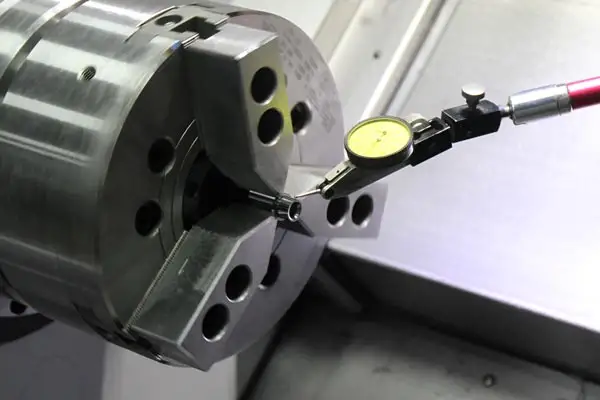
III. Refined Management of Cooling and Lubrication Systems: The Key to Thermal Deformation Control
During metal cutting, approximately 98% of mechanical energy is converted into heat energy. If this heat cannot be dissipated in time, it will lead to rapid tool wear and workpiece thermal deformation, seriously affecting machining accuracy and surface quality. Therefore, optimizing the cooling and lubrication system is an indispensable link in improving precision cutting efficiency.
Traditional flood cooling methods have problems such as low coolant utilization and significant environmental pollution. In recent years, minimum quantity lubrication (MQL) technology has been widely applied in the field of precision cutting. This technology sprays atomized coolant to the cutting area at millisecond intervals, significantly reducing coolant consumption while ensuring lubrication effectiveness. The more advanced pulsed minimum quantity lubrication strategy, by matching the thermal shock frequency with the material thermal diffusion rate, can compress the thickness of the heat-affected zone to less than one-fifth of traditional methods, effectively reducing dimensional errors caused by thermal expansion and contraction of the workpiece.
The nozzle position and injection angle of the coolant also affect the cooling effect. Research indicates that when the angle between the nozzle and the workpiece surface is approximately 25 degrees, the coolant flow rate at the bottom of the chip can increase by more than 40% compared to traditional right-angle injection, while turbulence intensity is reduced by approximately 60%, reducing secondary scratches on the machined surface caused by chips. Dongguan Yize Mould Co., Ltd has applied the optimized cooling system on multiple precision CNC lathes, increasing tool durability by approximately 30% and significantly improving the consistency of finishing dimensions.
IV. Process Path Planning and Equipment Upgrading: Overall Leap in System Efficiency
The efficiency improvement of a single operation has a ceiling, while the overall optimization of the process path often brings greater efficiency gains. By reasonably arranging the sequence of operations, reducing the number of setups, and merging steps, the total processing cycle of parts can be significantly shortened.
The popularization of multi-axis linkage machining technology enables multi-face machining of complex parts to be completed in a single setup, avoiding positioning errors and auxiliary time caused by multiple setups. The high-precision multi-axis milling equipment equipped by Dongguan Yize Mould Co., Ltd can handle complex curved surfaces and structural components. In the processing of precision mold inserts, connector mold parts, and other products, processing content that traditionally required three to four operations has been integrated into a single setup, improving comprehensive efficiency by more than 50%.
The accuracy retention of equipment is equally important. Regular equipment maintenance, guide rail accuracy calibration, and spindle dynamic balance detection are the foundation for ensuring long-term stable and efficient precision cutting. In addition, adopting online measurement and in-machine inspection technology allows dimensional inspection to be completed without disassembling the workpiece, with timely compensation when deviations are detected, reducing time loss due to rework of defective products. The German Zeiss coordinate measuring machine introduced by Dongguan Yize Mould Co., Ltd, combined with the first-piece full-dimensional inspection system, ensures that the machining accuracy of each batch of products remains stable within the tolerance range, reducing quality costs.
V. Digitalization and Intelligence: New Growth Pole for Precision Cutting Efficiency
With the deepening of Industry 4.0 and intelligent manufacturing, digital technology is reshaping the efficiency boundaries of precision cutting. The traditional processing model relying on the experience of operators is gradually being replaced by data-driven intelligent machining.
Online monitoring of tool wear is an important application direction of intelligence. By collecting cutting force signals, acoustic emission signals, or vibration signals, combined with machine learning algorithms, tool wear status can be judged in real time, and tools can be replaced in a timely manner before entering the severe wear stage. This not only avoids workpiece scrapping caused by tool chipping but also fully utilizes the effective life of the tool. Acoustic emission monitoring technology is particularly suitable for precision cutting scenarios. When micro-chipping occurs on the tool, the signal frequency suddenly jumps from 20kHz to above 200kHz, and the system can identify and issue an alarm within 0.5 seconds, with the false alarm rate controlled at an extremely low level.
Adaptive adjustment of cutting parameters is another key technology. In complex curved surface processing, tool paths generated by traditional CAM software assume uniform workpiece material, but the hardness and carbide distribution in different regions of actual castings may vary significantly. By dividing the workpiece surface into a large number of micro-units, each unit independently adjusts the feed rate based on real-time measured cutting force feedback, maximizing the material removal rate while ensuring machining quality. Dongguan Yize Mould Co., Ltd has introduced an adaptive machining system in the processing of some high-end precision parts, increasing machining efficiency by an average of more than 20%, while stably controlling surface roughness within Ra0.4μm.
A more long-term trend is the establishment of enterprise-level process knowledge bases. By precipitating the processing parameters, tool solutions, and quality data of each part into structured data, when similar parts are encountered later, optimized process plans can be directly retrieved through similarity search, shortening process debugging time by more than 70%. This data reuse model is becoming an important component of the core competitiveness of precision manufacturing enterprises.
VI. Dongguan Yize Mould Co., Ltd: A Practice Benchmark in Precision Cutting
As an enterprise with nearly two decades of deep involvement in the field of precision molds and precision parts processing, Dongguan Yize Mould Co., Ltd has accumulated rich practical experience in improving precision cutting efficiency. The company is located in Chang'an Town, Dongguan, known as the "Hub of China's Mold Manufacturing Industry," and possesses more than 100 CNC milling machines and lathes, as well as comprehensive precision processing equipment such as wire EDM, EDM, and optical grinding.
In terms of quality management, Dongguan Yize Mould Co., Ltd has passed multiple international certifications such as ISO 9001:2015, ISO 13485:2016, ISO 14001:2015, and IATF 16949:2016, and has established a full-process quality traceability system from raw material warehousing to finished product delivery. The company's precision mold machining accuracy can reach ±0.001mm, and precision part machining accuracy can reach ±0.002mm, placing it at a leading level in the same industry.
In terms of efficiency improvement, the DFM (Design for Manufacturability) analysis service implemented by Dongguan Yize Mould Co., Ltd can conduct manufacturability reviews of customer drawings at the order confirmation stage, identify design issues that may affect processing efficiency and quality in advance, and propose optimization suggestions. Combined with the automated process parameter configuration system and first-piece inspection system, the company can achieve the fastest 3-day delivery speed for precision parts, helping customers significantly shorten product development cycles.
Dongguan Yize Mould Co., Ltd serves multiple industries including automotive engineering, electronics and electrical appliances, aerospace, medical technology, tooling and fixtures, and mold manufacturing, with products exported to developed countries and regions such as Europe, America, and Japan. Upholding the development philosophy of "driving quality with technology, winning trust with quality," the company continues to cultivate and refine in the field of precision cutting, providing efficient, precise, and reliable processing solutions for global customers.
Frequently Asked Questions (FAQ)
Q1: Does improving precision cutting efficiency necessarily sacrifice machining accuracy?
Not necessarily. Cutting efficiency and machining accuracy are not simply opposing relationships. Through scientific tool selection, reasonable cutting parameter configuration, and advanced cooling and lubrication technology, efficiency can be improved while maintaining or even enhancing machining accuracy. The key lies in finding the optimal balance point between efficiency and quality, rather than blindly pursuing a single indicator. The practice of Dongguan Yize Mould Co., Ltd demonstrates that systematic process optimization often achieves simultaneous improvement in both accuracy and efficiency.
Q2: How can small and medium-sized enterprises improve precision cutting efficiency with limited equipment investment?
SMEs can start from multiple low-cost directions. First, optimizing existing tool selection and cutting parameters to fully tap equipment potential is the optimization method with the highest return on investment. Second, improving the cooling and lubrication system, such as upgrading nozzle structures or adopting minimum quantity lubrication technology. Third, optimizing process routes to reduce setup times and auxiliary time. Finally, establishing standardized operating procedures and tool management systems to reduce efficiency fluctuations caused by human factors. These measures do not require large equipment investment but can bring significant efficiency improvements.
Q3: How to balance tool cost and machining efficiency in precision cutting?
A comprehensive consideration between tool cost and machining efficiency is required. High-performance tools have a higher unit price but longer service life and higher cutting efficiency, so the tool cost allocated to each part may actually be lower. Enterprises should establish a comprehensive tool cost accounting system that incorporates factors such as tool price, service life, machining efficiency, and quality stability into the evaluation, rather than only focusing on the purchase unit price. At the same time, extending the total tool life through methods such as tool regrinding and coating repair is also an effective way to reduce comprehensive tool costs. Dongguan Yize Mould Co., Ltd has formulated a graded tool strategy for different processing scenarios, using high-end tools in key processes to ensure efficiency and quality, and selecting more cost-effective tools in ordinary processes, achieving the optimal configuration of overall costs.
Share on Social:


-
PREV:
CNC Prototype Machining Guide: Turning Concepts into Precision Parts
- NEXT: Null
Request A Quote
We offer one-stop consulting services from design to mass production, ready to answer your questions anytime!


In This Article
Related Posts
How to Improve Precision Cutting Efficiency: A Full-Link Solution for Process Optimization and Intelligent Manufacturing
2026-09-18
CNC Prototype Machining Guide: Turning Concepts into Precision Parts
2026-09-15
How CNC Achieves Micron Accuracy
2026-09-08
Precision Machined Components Corrosion Control Guide
2026-09-03


