


 >


Custom Machined Components Guide: How to Source Precision Parts That Perform
By hqt
Oct 05, 2026
Related Posts

Stainless Steel Precision Parts: A Complete Guide to Stainless Steel Machining
2026-11-02<

What to Pay Attention to When Machining Tungsten Carbide
2026-10-30<

Stainless Steel Precision Parts: A Complete Guide for Modern Manufacturing
2026-10-27<

When Is a Hot Runner System Essential for Plastic Mold Manufacturing?
2026-10-22<
From surgical instruments to aerospace brackets and automated production lines, nearly every high-performance product depends on components that cannot simply be bought off the shelf. This is exactly where custom machining parts come in. Whether you need a single functional prototype or a production run of 10,000 units, custom machining gives you full control over geometry, material, tolerance and surface finish. This guide explains the processes, materials, costs and selection criteria you need to source custom machining parts with confidence.
What Are Custom Machined Components?
Custom machined components are parts produced by removing material from a solid block of stock using computer-controlled machine tools — most commonly CNC milling and CNC turning. Unlike casting, forging or 3D printing, machining is a subtractive process: the machine cuts away unwanted material until the final geometry is achieved.
What makes these parts "custom" is that every feature — dimensions, tolerances, threads, holes, surface finish and material grade — is defined by your engineering drawing and CAD model, not by a supplier's standard catalog. Custom machining parts are used across virtually every industry:
- Medical devices — instrument housings, implantable-grade components, surgical tooling
- Aerospace and defense — structural brackets, engine components, precision fixtures
- Automotive — transmission parts, sensor housings, custom jigs and gauges
- Industrial automation — robot arms, custom pulleys, mounting plates, end-of-arm tooling
- Electronics — heat sinks, chassis parts, connector housings
- Consumer products — prototypes, enclosures, decorative metal parts
Why Custom Machining Parts Beat Off-the-Shelf Alternatives
Off-the-shelf components are economical — until they are not quite right. Custom machining parts deliver four advantages that standard parts cannot match:
1. Exact fit and function. The part is engineered around your assembly, loads and operating environment, eliminating costly redesigns, shims and field modifications.
2. Material freedom. You choose the exact grade — from 6061-T6 aluminum for lightweight structures to 17-4 PH stainless steel for corrosion resistance — instead of accepting whatever the catalog offers.
3. Real precision. Modern CNC machines routinely hold tolerances of ±0.025 mm (about ±0.001"), with high-precision work reaching ±0.005 mm. That repeatability is what makes assemblies work without hand fitting.
4. Seamless scaling. The same CAM program and tooling take you from one prototype to a full production run, so what you validate is what you mass-produce.
Core Manufacturing Processes for Custom Machining Parts
Understanding the main processes helps you specify the right approach — and often the right price.
表格
| Process | Best For | Typical Applications |
|---|---|---|
| CNC Milling | Complex 3D geometries, flat surfaces, pockets, slots | Housings, brackets, plates, molds |
| CNC Turning | Cylindrical, symmetric parts | Shafts, bushings, fittings, pulleys |
| 5-Axis Machining | Complex contoured surfaces, one-setup accuracy | Aerospace components, impellers, medical implants |
| EDM (Wire / Sinker) | Hard materials, sharp internal corners, fine details | Mold inserts, tooling, hardened components |
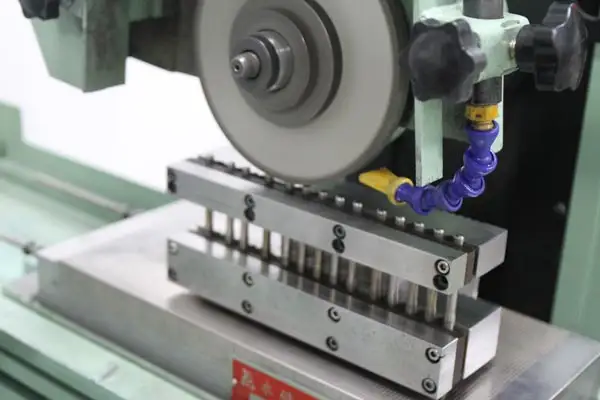
| Grinding | Ultra-tight tolerances and fine surface finishes | Precision shafts, bearing seats, gauge parts |
Most suppliers combine these processes in a single workflow: turning for the body, milling for features, and grinding or surface finishing as a final pass. A single machining center can often deliver a complete component without secondary operations — which shortens lead time and reduces cumulative tolerance error.
Choosing the Right Material for Your Custom Machined Components
Material selection drives roughly one-third of the cost and most of the performance of custom machining parts. Match the grade to the service conditions — not just to the price per kilogram.
表格
| Material | Key Strengths | Typical Use Cases |
|---|---|---|
| Aluminum 6061-T6 / 7075 | Lightweight, machinable, good strength-to-weight | Housings, frames, drone and robotics parts |
| Stainless Steel 304 / 316 | Corrosion resistance, cleanability | Medical, food processing, marine parts |
| Alloy Steel 4140 / 4340 | High strength, toughness, fatigue resistance | Gears, shafts, heavy-duty fixtures |
| Titanium Ti-6Al-4V | Exceptional strength-to-weight, biocompatible | Aerospace, implants, high-end cycling |
| Brass / Copper | Conductivity, low friction, aesthetic finish | Connectors, fittings, bearings, bushings |
| POM (Delrin) / PEEK | Lightweight, self-lubricating, chemical resistance | Gears, insulators, sliding components |
Ask your supplier three questions before finalizing a material: Does the grade machine cleanly at the required tolerance? Will it survive the operating temperature and chemical exposure? And does the surface finish requirement demand post-processing such as anodizing or passivation?
Tolerances and Surface Finishes: Speaking the Language of Precision
Tolerance is the single most misunderstood specification in custom machining. Tighter is not always better — every extra decimal place adds machining time, inspection effort and cost.
- Standard tolerance: ±0.1 mm — adequate for most structural and cosmetic parts
- Precision tolerance: ±0.025 mm — typical for mating surfaces and press fits
- High-precision tolerance: ±0.005 mm — reserved for critical features such as bearing seats and optical mounts
The same logic applies to surface finish. A general machining finish of Ra 3.2 µm is fine for most parts; bearing surfaces may need Ra 0.8 µm; sealing faces may require Ra 0.4 µm or finer, usually via grinding or polishing.
Practical rule: specify tight tolerances and fine finishes only on the features that functionally need them, and note them on the drawing. Let the rest default to standard — you will cut cost and lead time without compromising performance.
Design for Manufacturability (DFM): Seven Rules That Cut Cost and Lead Time
The fastest way to reduce the price of custom machining parts is to design them for the machine. Share these principles with your engineering team:
- Avoid sharp internal corners. Square pockets require radiused corners matching the cutter diameter — a sharp corner means EDM or extra operations.
- Watch depth-to-diameter ratios. Deep, narrow holes and slots are slow to machine; keep standard proportions where possible.
- Specify tolerances only where needed. Over-tolerancing is the number one cost driver in precision machining.
- Design for tool access. Features should be reachable by standard tools; avoid deep undercuts that force custom tooling.
- Use standard thread sizes and depths. Off-the-shelf taps are faster and cheaper than exotic thread forms.
- Maintain sensible wall thickness. Very thin walls (below 0.5 mm in metal) risk vibration, deflection and breakage during machining.
- Provide complete, unambiguous files. A STEP or IGES 3D model plus a PDF or 2D drawing with GD&T notes prevents quoting errors.
A good machining partner will review your design proactively and return a DFM report — flagging risks and suggesting cost-saving changes before a single tool touches material. That review is one of the strongest signals of a serious supplier.
How Much Do Custom Machining Parts Cost?
Pricing for custom machined components is driven by six variables:
- Material — raw stock price and how much is machined away
- Machine time — complexity, number of setups, cycle time
- Tolerance and finish — tighter specs mean slower speeds, more passes and inspection
- Quantity — setup cost amortizes across the batch; larger runs lower unit price
- Secondary operations — anodizing, plating, heat treatment, assembly
- Packaging and logistics — particularly for fragile or large parts
As a general benchmark, a simple aluminum bracket may cost a few dollars per unit at production volumes, while a complex, tightly toleranced aerospace component can reach hundreds of dollars. The most expensive part you will ever buy is the one that fails in service — so optimize total cost, not unit price.
Cost-saving levers: combine multiple parts into one machined component, relax non-critical tolerances, choose free-machining grades, and order prototype and production quantities together.
How to Choose a Reliable Custom Machining Partner
The best specifications in the world are worthless if the supplier cannot hold them. Evaluate potential partners on these criteria:
- Certifications and quality system — ISO 9001:2015 as a baseline; AS9100 for aerospace, ISO 13485 for medical
- Machine capabilities — multi-axis CNC centers, EDM, grinding, and in-house inspection equipment such as CMM
- Inspection and documentation — First Article Inspection reports, material certificates, and dimensional reports delivered with every order
- DFM expertise — do they challenge your design with suggestions, or just quote it?
- Lead time and communication — realistic delivery promises, transparent quoting, and a single point of contact
- IP protection — signed NDAs and secure handling of your drawings and models
Red flags to avoid: quotes issued without any engineering questions, "unlimited capability" claims with no inspection equipment, and pricing that changes once the design is finalized.
Frequently Asked Questions (FAQ)
Q1: What are custom machined parts used for? Custom machining parts are used for one-off prototypes, replacement components and production parts across medical, aerospace, automotive, robotics, electronics and industrial equipment — anywhere a standard catalog part does not meet the geometry, material or tolerance requirements.
Q2: What tolerance can custom CNC machining achieve? Standard machining typically holds ±0.1 mm. Precision work reaches ±0.025 mm, and high-precision features can be held to ±0.005 mm with the right machine, tooling and inspection process.
Q3: What materials can be custom machined? Almost any machinable solid — aluminum, steel, stainless steel, titanium, brass, copper, and engineering plastics such as POM, PEEK and ABS. The best grade depends on your strength, corrosion, temperature and cost requirements.
Q4: What files do I need to provide for a quote? Provide a 3D model in STEP or IGES format plus a 2D drawing with critical tolerances, surface finish and thread specifications. If the drawing is incomplete, a good supplier will ask questions rather than guess.
Q5: How long does it take to machine custom parts? Simple prototypes can ship in 3–5 business days; complex or high-precision production runs typically take 2–4 weeks, depending on material availability, batch size and finishing requirements.
Q6: How can I reduce the cost of custom machining parts? Relax non-critical tolerances, avoid sharp internal corners, use standard threads, choose machinable material grades, combine parts, and increase order quantity so setup costs amortize across more units.
Final Thoughts
Custom machined components are the quiet backbone of modern manufacturing — small in volume, enormous in importance. The difference between a smooth project and a costly failure usually comes down to specification quality, design-for-manufacturability thinking and the supplier you choose. Define your tolerances honestly, share complete files, ask for a DFM review, and select a partner with the machines, certifications and inspection rigor to back up their promises. Do that, and custom machining parts stop being a sourcing headache and become a genuine competitive advantage.
Share on Social:


Request A Quote
We offer one-stop consulting services from design to mass production, ready to answer your questions anytime!


In This Article
Related Posts
Stainless Steel Precision Parts: A Complete Guide to Stainless Steel Machining
2026-11-02
What to Pay Attention to When Machining Tungsten Carbide
2026-10-30
Stainless Steel Precision Parts: A Complete Guide for Modern Manufacturing
2026-10-27
When Is a Hot Runner System Essential for Plastic Mold Manufacturing?
2026-10-22


