


 >
>


CNC Prototype Machining: A Professional Guide with Yize Mould’s Commitment
By hqt
Jul 31, 2026
Related Posts

How to Improve Precision Cutting Efficiency: A Full-Link Solution for Process Optimization and Intelligent Manufacturing
2026-09-18<

CNC Prototype Machining Guide: Turning Concepts into Precision Parts
2026-09-15<

How CNC Achieves Micron Accuracy
2026-09-08<

Precision Machined Components Corrosion Control Guide
2026-09-03<
In the field of precision manufacturing, CNC prototype machining serves as the critical bridge between design and mass production. A successful prototype not only validates the manufacturability of a design but also determines the efficiency, cost, and quality consistency of subsequent batch production. Choosing a CNC prototype service provider has become a core strategy to enhance product development competitiveness.
One: Design Review — The Foundation of Successful Prototyping
CNC prototype machining is far more than “machining according to drawings.” The blueprint is the sole technical language, and its completeness and accuracy directly determine the success of the entire process.
- Tolerances must be explicitly defined: Critical dimensions and geometric tolerances (e.g., concentricity, position) must be clearly annotated. Avoid vague phrases like “all dimensions as per drawing.” Overly tight tolerances inflate cost; overly loose ones compromise assembly.
- Material specifications must be precise: Use standardized material grades such as “7075-T6 aluminum alloy” or “SUS303 stainless steel,” not generic terms like “aluminum” or “stainless steel.” Different materials exhibit distinct machinability and thermal deformation characteristics, directly influencing tool selection and process parameters.
- Design for manufacturability (DFM) review is essential: Designs must be evaluated for practical machining feasibility. Issues such as depth-to-diameter ratios exceeding 5:1, thin-walled structures prone to warping, or inaccessible tool paths must be identified and optimized by process engineers before machining begins.
Two: Tolerance Control and Surface Finishing — Ensuring Precision and Functionality
Tolerance is not merely a dimensional requirement — it is a systemic engineering challenge.
- Prioritize functional surfaces: Critical areas such as sealing surfaces, mating holes, and sliding interfaces require tight tolerances (e.g., ±0.005 mm), while non-critical edges can be relaxed to balance cost and performance.
- Surface treatments affect final dimensions: Processes like anodizing, nickel plating, or sandblasting induce dimensional shifts. The chosen finish must be specified during prototyping, and key mating surfaces must be re-measured post-treatment to avoid “machined OK, finished failed” scenarios.
- Surface roughness must align with function: Ra 0.4 and Ra 1.6 can differ by up to 100% in processing cost. Set roughness based on actual requirements — sealing, wear resistance, or coating adhesion — and avoid unnecessary mirror finishes.
Three: Material Selection and Fixturing Strategies — The Backbone of Stable Machining
Material and fixturing are often overlooked but decisive factors in yield and precision.
- Balance material properties with machinability: Aluminum allows high-speed cutting and excellent surface finish; titanium offers high strength but poor thermal conductivity, requiring reduced speeds and enhanced cooling; engineering plastics like PEEK demand strict control of thermal stress to prevent deformation.
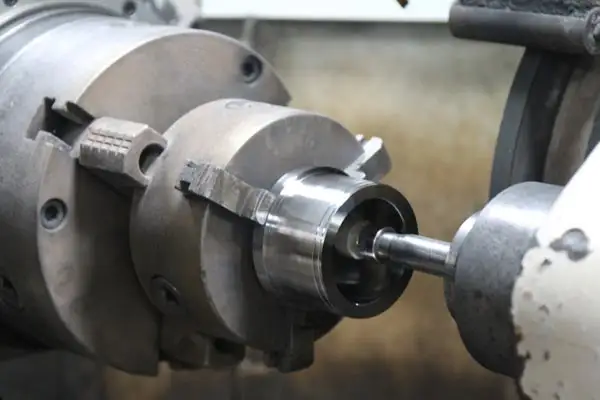
- Fixture rigidity ensures dimensional stability: Thin-walled parts and slender shafts are prone to deflection under clamping or cutting forces. Use soft jaws, split sleeves, axial clamping, or process supports to enhance rigidity. Avoid clamping directly on critical surfaces to prevent damage.
- Optimize tooling and parameters dynamically: Prototyping is the ideal phase for fine-tuning cutting parameters. Adjust spindle speed, feed rate, and depth of cut through trial cuts to minimize vibration, reduce tool wear, and establish standardized parameters for future production.
Four: Inspection and Delivery — Closing the Quality Loop with Data
Prototyping does not end with delivery — it begins a quality feedback loop.
- First-article inspection must be comprehensive: Provide full dimensional reports from CMM (Coordinate Measuring Machine), surface roughness measurements, and tolerance comparison logs to substantiate all critical dimensions.
- Deliver the final state, not the intermediate: The delivered prototype must be fully finished — cleaned, treated, and packaged — to match the intended acceptance criteria. Delivering “machined but untreated” parts invites disputes downstream.
- Archive all process records: Retain CNC programs, tool lists, cutting parameters, and inspection data as foundational references for production process documentation, ensuring consistency from prototype to volume manufacturing.
Why Choose Yize Mould?
Dongguan Yize Mould Co., Ltd. (Yize Mould) has specialized in CNC prototype machining for years, offering distinct local advantages:
- Strategic Location: Situated within Dongguan’s precision manufacturing clusters — including Songshan Lake and Houjie — we benefit from rapid supply chain response, short raw material procurement cycles, and efficient logistics, enabling delivery in 7–15 days.
- Technical Expertise: Equipped with high-precision 3-axis CNC machining centers and CMM inspection systems, we routinely handle complex geometries, micro-tolerances (±0.002 mm), and irregular components. And we have many cases in this area.
- Standardized Processes: We implement a rigorous workflow from design review and process optimization to first-article confirmation and final inspection, ensuring every project has a traceable quality archive.
- Customer-Centric Approach: We specialize in small-to-medium batch prototyping, supporting iterative design revisions and rapid turnaround. We serve R&D teams with flexible, reliable, and cost-effective solutions.
We don’t just provide machining services — we act as your technical partner in product development.
FAQ: Frequently Asked Questions
Q1: How long does CNC prototype machining typically take?
A: Standard projects require 7–15 working days. Simple parts with easily machinable materials can be delivered within 7 days. Complex parts involving multiple operations, tight tolerances, or iterative validation typically require 10–15 days. The final timeline is confirmed after process review of the drawing.
Q2: Why do quotes for CNC prototype machining vary so much between suppliers?
A: Price differences stem from: ① Material grade (e.g., food-grade vs. commercial aluminum); ② Tolerance requirements (±0.01 mm vs. ±0.1 mm); ③ Surface finish options (sandblasting, anodizing, plating); ④ Inclusion of inspection reports and design optimization services. Always compare total cost, not just unit price.
Q3: Will the prototype match the final production parts?
A: When process parameters are stabilized and material batches are consistent, prototypes and production parts should be highly consistent. Yize Mould directly transfers prototype processes into production, eliminating the risk of “prototype good, production poor.”
Q4: Can I order just one prototype?
A: Yes. We regularly support startups and R&D teams with single-unit prototyping. Whether one piece or fifty, we apply the same quality standards and inspection protocols.
Q5: Can you work with incomplete drawings?
A: We offer complimentary design for manufacturability (DFM) reviews. If drawings lack critical tolerances, ambiguous materials, or non-machinable features, our engineering team will proactively suggest improvements to reduce downstream risks.
Share on Social:


Request A Quote
We offer one-stop consulting services from design to mass production, ready to answer your questions anytime!


In This Article
Related Posts
How to Improve Precision Cutting Efficiency: A Full-Link Solution for Process Optimization and Intelligent Manufacturing
2026-09-18
CNC Prototype Machining Guide: Turning Concepts into Precision Parts
2026-09-15
How CNC Achieves Micron Accuracy
2026-09-08
Precision Machined Components Corrosion Control Guide
2026-09-03


