


 >
>


Precision CNC Machining Manufacturer Guide
By hqt
Aug 03, 2026
Related Posts

How to Improve Precision Cutting Efficiency: A Full-Link Solution for Process Optimization and Intelligent Manufacturing
2026-09-18<

CNC Prototype Machining Guide: Turning Concepts into Precision Parts
2026-09-15<

How CNC Achieves Micron Accuracy
2026-09-08<

Precision Machined Components Corrosion Control Guide
2026-09-03<
Precision CNC machining is the backbone of high-integrity component production across aerospace, medical, automotive, and industrial automation sectors. As a precision CNC machining manufacturer, success hinges on the seamless integration of advanced machinery, material science, and rigorous quality control — not merely on machine count, but on process discipline. This guide outlines the essential framework for achieving micron-level accuracy and operational reliability, with specific reference to Yize Mould's capabilities.
Core Process for Precision CNC Machining Manufacturer
The journey from digital design to finished component is a tightly controlled sequence designed for repeatability within microns. It begins with design for manufacturability (DFM) analysis, where CAD models are evaluated for tool access, wall thickness, undercuts, and surface finish feasibility. This step prevents costly rework and ensures compatibility with CNC capabilities.
The material selection phase prioritizes alloys such as 6061-T6 aluminum, 316L stainless steel, titanium Grade 5, and PEEK — each chosen for mechanical performance, thermal stability, and machinability under high-speed cutting. Toolpath optimization follows, leveraging 5-axis simultaneous machining to achieve complex geometries in a single setup, minimizing datum shifts and improving dimensional consistency.
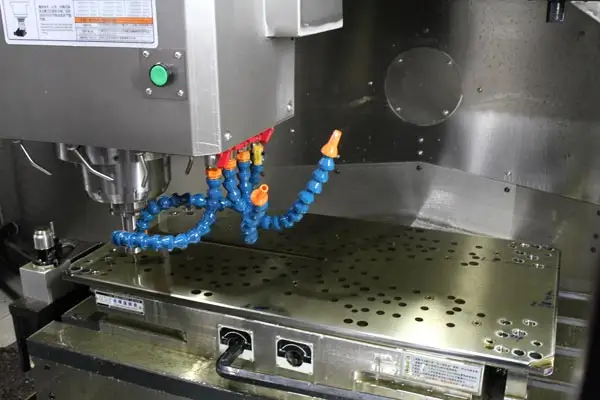
Precision machining operations include high-speed milling, CNC turning, Swiss-type machining, and micro-drilling — all executed on machines calibrated to maintain tolerances of ±0.005 mm or tighter. Surface finishes such as anodizing, passivation, sandblasting, and diamond polishing are applied post-machining to meet functional and aesthetic requirements.
Final validation occurs through in-process metrology: CMM inspections, optical profilometry, and laser scanning verify critical dimensions. Process parameters — spindle speed, feed rate, coolant flow, and tool wear compensation — are logged and archived to ensure batch-to-batch consistency across thousands of units.
Technical Requirements for Industry-Grade Performance
- Tolerance Control: Achieve ±0.005 mm on critical features, with some applications requiring ±0.001 mm for medical implants or aerospace actuators.
- Surface Finish Integrity: Ra values from 0.1 to 0.4 µm are standard; mirror finishes (Ra < 0.05 µm) are achievable for optical and sealing surfaces.
- Material-Specific Processing: Titanium requires low-speed, high-torque cutting; hardened steels demand carbide tools and cryogenic cooling.
- Process Traceability: Every batch must be linked to machine settings, tool IDs, and inspection records under ISO 9001 and AS9100 frameworks.
- Certification Compliance: ISO 9001, ISO 13485, and AS9100 are mandatory for regulated industries, ensuring documented quality systems and audit readiness.
Why Choose Yize Mould?
Yize Mould is a dedicated precision CNC machining manufacturer with over 20 years of specialized experience in high-tolerance component production. We serve global clients in medical, aerospace, and industrial automation sectors by delivering parts with dimensional accuracy of ±0.005 mm, surface finishes as fine as Ra 0.05, and full compliance with ISO, DIN, ASTM, and JIS standards.
Our in-house capabilities span full-cycle CNC manufacturing: from design review and simulation to 5-axis milling, Swiss turning, surface finishing, and final inspection. We operate a fleet of Japanese and German precision CNC machines, including DMG MORI and HAAS units, maintained under strict calibration protocols. Every component undergoes 100% dimensional verification using Zeiss CMM systems, and all processes are documented under a certified ISO 9001 quality management system. With a focus on complex aerospace brackets, micro-medical instruments, and high-volume automotive connectors, Yize Mould combines engineering rigor with responsive logistics — delivering not just parts, but mission-critical components ready for integration.
Frequently Asked Questions
Q: What information do I need to provide for a CNC machining quotation?
A: Please submit a 3D model in STP, IGS, or SolidWorks format, along with specifications for material grade, dimensional tolerances, surface finish requirements, production volume, and any applicable industry standards. Our engineering team will evaluate manufacturability and provide a detailed quote within 48 hours.
Q: What is your minimum order quantity (MOQ)?
A: We support both prototype runs (1–10 pieces) and high-volume production (10,000+ units). There is no enforced MOQ — we tailor our production planning to your project scale, whether you require a single custom bracket or a series for mass deployment.
Q: Do you offer ISO-certified CNC machining services?
A: Yes. Yize Mould operates under a certified ISO 9001 quality management system, with documented procedures for incoming material inspection, in-process control, final inspection, and non-conformance handling — fully aligned with international manufacturing standards.
Q: How do you ensure dimensional accuracy across large production runs?
A: We implement real-time tool wear monitoring, automated CMM checks at 10% intervals during production, and thermal compensation for machine drift. All critical dimensions are digitally archived, and statistical process control (SPC) charts are generated for every job to ensure stability over time.
Q: Can you machine complex geometries such as internal channels, thin walls, or micro-features?
A: Absolutely. Our 5-axis CNC systems and Swiss-type lathes are engineered for intricate features including internal cooling passages, wall thicknesses under 0.3 mm, and micro-gears with 0.1 mm tooth profiles. We design tooling and fixturing specifically to enable these capabilities without compromising precision.


Request A Quote
We offer one-stop consulting services from design to mass production, ready to answer your questions anytime!


Related Posts
How to Improve Precision Cutting Efficiency: A Full-Link Solution for Process Optimization and Intelligent Manufacturing
2026-09-18
CNC Prototype Machining Guide: Turning Concepts into Precision Parts
2026-09-15
How CNC Achieves Micron Accuracy
2026-09-08
Precision Machined Components Corrosion Control Guide
2026-09-03


